• Tag Archives DOS
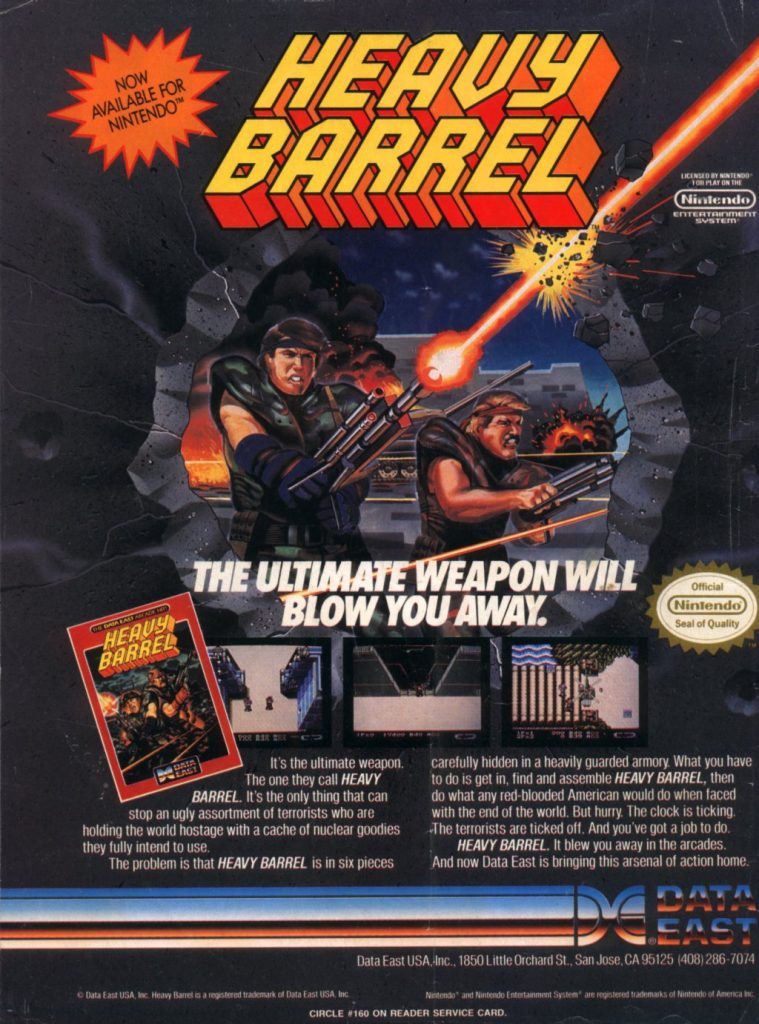
  • VideoGames & Computer Entertainment (June 1990)

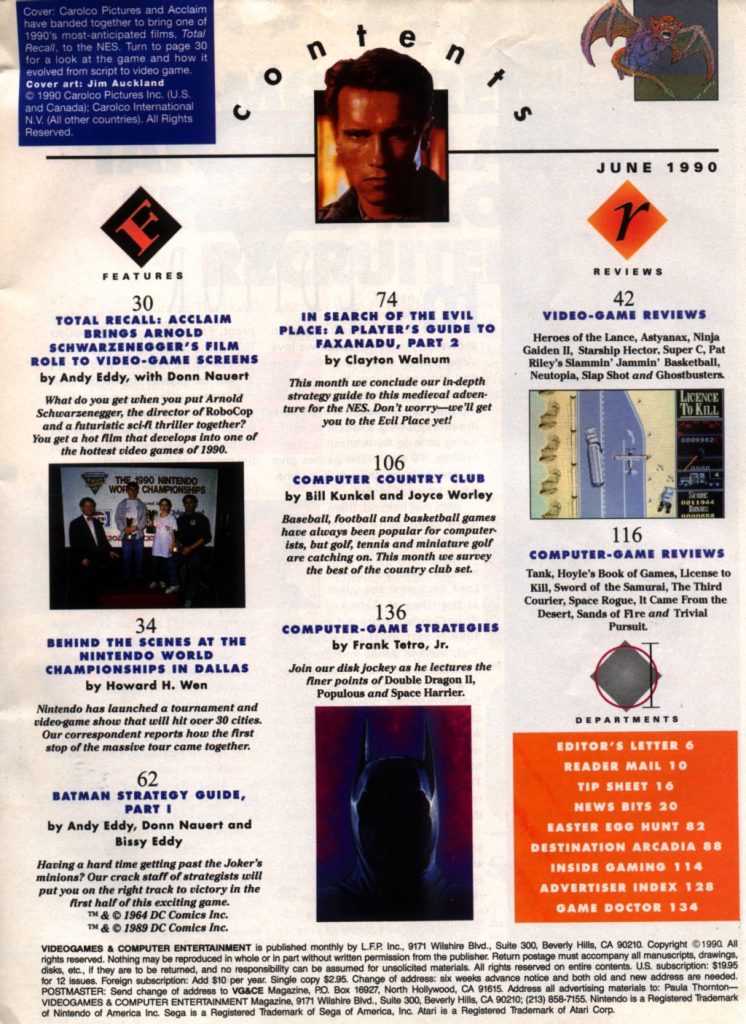
    VideoGames & Computer Entertainment was my favorite video game magazine of the late 1980s and early 1990s. Some of the key people responsible for the original Electronic Games magazine were involved with VG&CE. It eventually evolved into Tips & Tricks which wasn’t really my cup of tea. The June 1990 issue of VG&CE includes:

    Features

    • Total Recall: Acclaim Brings Arnold Schwarzenegger’s Film Role to Video-Game Screens – A detailed look at this NES game based on the movie of the same name. Like most licensed games, this one wasn’t great though I suppose it was better than some. It definitely has the nostalgia factor going for it.
    • Behind the Scenes at the Nintendo World Championships in Dallas – The Nintendo World Championship had to be just about the height of the NES era. It was sort of a case of life imitating art as The Wizard had just been released in theaters the year before.
    • Batman Strategy Guide, Part I – The first part of a detailed strategy guide for Batman: The Video Game for the NES. While licensed games are pretty poor the vast majority of the time, this one bucks the trend and was actually a solid game. The game and the movie are probably still my Batman favorites.
    • In Search of the Evil Place: A Player’s Guide to Faxanadu, Part 2 – The second part of a detailed strategy guide for this classic NES adventure game.
    • Computer Country Club – An overview of available golf and tennis games. Some of the golf games looked at here include Accolade’s Mean 18, Hole-In-One (miniature golf), Mini-Putt, World Tour Golf, World Class Leaderboard, Jack Nicklaus’ Greatest 18 Holes of Major Championship Golf, Table Tennis Simulation, Serve & Volley, and others.
    • Computer-Game Strategies – Brief strategy guides for Double Dragon II (Amiga, Atari ST, Commodore 64, IBM PC), Populous (Amiga, IBM PC), and Space Harrier (Amiga, Atari ST, Commodore 64, IBM PC).
    Reviews

    • Video-Game Reviews – Reviews of Heroes of the Lance (NES) – (while I loved the Gold Box series of D&D games, I thought this action oriented game was pretty terrible), Astyanax (NES) – (I actually didn’t care for this one much though it got good reviews), Ninja Gaiden II (NES), Starship Hector (NES), Super C (NES), Pat Riley’s Slammin’ Jammin’ Basketball (Sega Genesis), Neutopia (TurboGrafx-16), Slap Shot (Sega Master System), and Ghostbusters (Sega Genesis).
    • Computer-Game Reviews – Reviews of Tank (Spectrum Holobyte for the IBM PC), Hoyle’s Book of Games (Sierra On-Line for the IBM PC), License to Kill (Domark/Broderbund for the Amiga, Atari ST, IBM PC, and Commodore 64), Sword of the Samurai (Microprose for the IBM PC), The Third Courier (Accolade for the IBM PC), Space Rogue (by Origin for the Apple II, Commodore 64, and IBM PC – I always wanted this one), It Came From the Desert (by Cinemaware for the Amiga, Atari ST, IBM PC), Sands of Fire (by Three-sixty Software for the IBM PC and Macintosh), and Trivial Pursuit (by Parker Brothers for the IBM PC).

    Departments

    • Editor’s Letter – Andy Eddy discusses games based on movies and celebrities in video games.
    • Reader Mail – The letters from readers this month are mostly about Nintendo’s business practices and then current anti-trust issues.
    • Tip Sheet – The inaugural edition of this column includes tips and basic strategies for Kung-Fu Heroes by Culture Brain for the NES.
    • News Bits – Joe Montana signs deal with Sega, new add-on for A-10 Tank Killer, Defender of the Crown creator developing Centurion: Defender of Rome, Atari opens up direct phone line for orders of Atari Lynx and Portfolio products, new newsletter for Amiga gamers, Commodore to market games machine based on Amiga 500, and much more.
    • Easter Egg Hunt – Hidden features and secrets in Double Dragon II (NES), Golden Axe (Genesis), Revenge of Shinobi (Genesis), and Fighting Street (TurboGrafx-16).
    • Destination Arcadia – A look at new games shown at the 1990 Acme Show in Chicago including DJ Boy from American Sammy, WWF Superstars from Technos, Klax from Atari, AmeriDarts from Ameri Corporation, Four Trax from Atari, Badlands from Atari, Metal Hawk from R. H. Belam, Capcom Bowling from Capcom, Buster Bros. from Capcom, Mercs from Capcom, Final Fight from Capcom, Vapor Trail from Data East, Too Crude – Double Dragon from Data East, Rai Den from Irem, Dragon Breed from Irem, R-Type II from Irem, Toki from Irem, Aliens from Konami, Teenage Mutant Ninja Turtles from Konami, Off Road from Leland, Trog from Bally/Midway, PlayChoice from Nintendo, Fire Shark from Romstar, Beast Busters from SNK, Neo-Geo System from SNK, Line of Fire from Sega, M.V.P. from Sega, Cadash from Taito, and lots more.
    • Inside Gaming – A look at who might win the upcoming video game battle between Nintendo, Sega, and NEC.
    • Game Doctor – Questions answered about music on the SMS, the NES expansion port, the TurboGrafx-16 CD-ROM add-on, transferring files between an Apple II and IBM PC, and more.
    …and more!

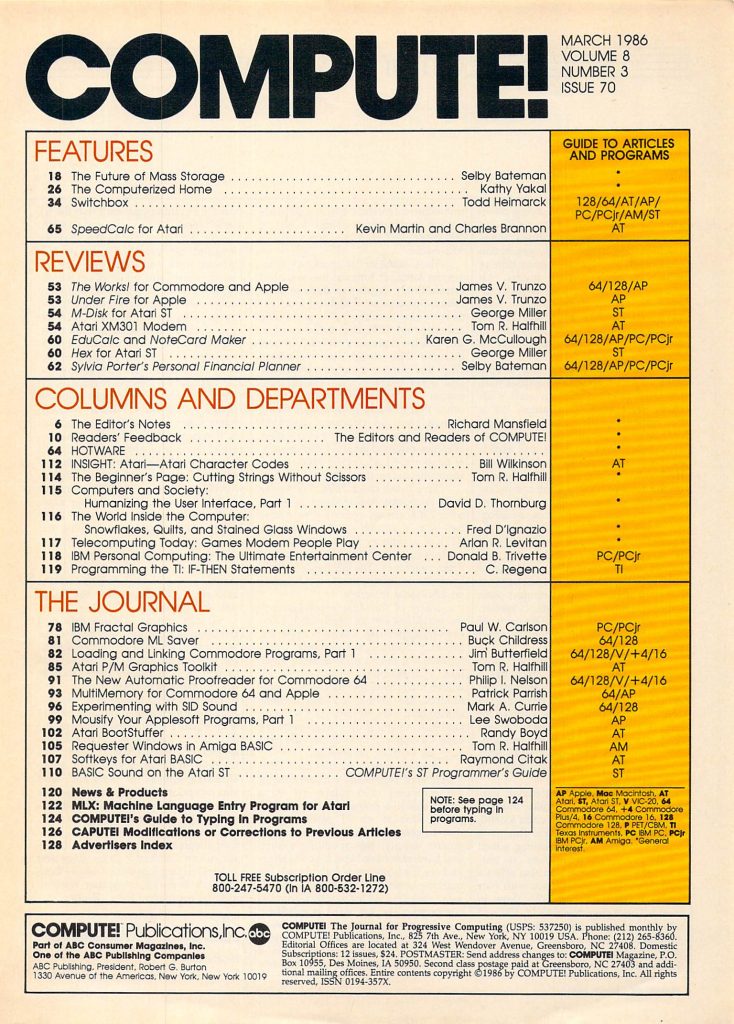
  • Compute! (March 1986)

    Source: Compute! – Issue Number 70 – March 1986

    Compute! was an excellent magazine that covered most popular computers of the time. I was partial to the spin-off Gazette because I had a Commodore 64 but this one was excellent as well. It was a little less technical that Byte but all magazines at the time were technical compared to today. The March 1986 issue includes:

    Features

    • The Future of Mass Storage – The future was bright for mass storage. 3.5″ floppies were replacing 5.25″ floppies, Hard drives were becoming affordable, and optical storage for the average user was on the horizon.
    • The Computerized Home – Computerized home automation was a thing long before Alexa. The X-10 interface was the de-facto standard and X-10 modules were available for pretty much any platform.
    • Switchbox – A type-in puzzle game with versions specifically for the Commodore 128, Commodore 64, Atari 8-bit, Atari ST, PC, and Amiga.
    • SpeedCalc for Atari – A type-in professional quality spreadsheet program for the Atari 8-bit.

    Reviews

    • The Works! – A software package for the Commodore 64 and Apple II that includes 13 programs in the categories of tools, organizers, arts, and learning.
    • Under Fire – A World War II strategy game for the Apple II.
    • M-Disk – Software for creating a RAM Disk on the Atari ST.
    • Atari XM301 Modem – A 300bps direct connect modem for Atari 8-bit computers.
    • EduCalc and NoteCard Maker – A combination of a simplified spreadsheet program and simplified database manager with versions for the Commodore 64, Apple II, and PC (Apple II version reviewed here).
    • Hex – A puzzle/strategy game for the Atari ST.
    • Sylvia Porter’s Personal Financial Planner – This software package includes six programs including Transaction Manager, Budget Manager, Asset/Liability Manager, Balance Sheet, and Financial Planner. The Commodore 64 version is reviewed here with versions also available for the PC and Apple II.

    Columns and Departments

    • The Editor’s Notes – A comparison of the new Amiga and Atari ST.
    • Readers’ Feedback – Letters from readers about code comments, computers for charity, recording music on the Amiga, and more.
    • HOTWARE – The top five selling software titles in three different categories. In the top places were F-15 Strike Eagle (Entertainment), Typing Tutor III (Education), and Print Shop (Home Management).
    • INSIGHT: Atari – A look at Atari character codes. Atari 8-bit computers used a variant of ASCII called ATASCII.
    • The Beginner’s Page: Cutting Strings Without Scissors – How to split strings in BASIC.
    • Computers and Society: Humanizing the User Interface, Part 1 – Exploring ways to make the user interface easier to use and more intuitive.
    • The World Inside the Computer: Snowflakes, Quilts, and Stained Glass Windows – Art on the Amiga.
    • Telecomputing Today Games Modern People Play – A look at online multiplayer gaming. At the time, that typically meant turn based gaming on BBS systems or services like CompuServe.
    • IBM Personal Computing: The Ultimate Entertainment Center – A guide for using your PC or PCjr with a TV.
    • Programming the TI: IF-THEN Statements – Using IF-THEN statements including examples for simulating AN/OR, doing Algebra, and more.
    • News & Products – Valhalla announced for the Commodore 64; MIDI Ensemble for the PC; AtariWriter and AtariWriter Plus word processors for the Atari ST; What’s Our Worth? home inventory package for the Commodore 64; and more.

    The Journal

    • IBM Fractal Graphics – Three type-in programs for creating fractals on the IBM PC and PCjr.
    • Commodore ML Saver – A type-in program for saving machine language programs directly from memory to disk on the Commodore 64.
    • Loading and Linking Commodore Programs, Part 1 – The first in a series of article on loading, chaining, and overlaying programs on Commodore computers.
    • Atari P/M Graphics Toolkit – Atari Player/Missile graphics is the Atari 8-bit version of sprites. This type-in toolkit makes it easier to develop and use P/M graphics on the Atari.
    • MultiMemory for Commodore 64 and Apple – Short type-in programs for the Commodore 64 and Apple II that allow you to segment memory for loading multiple BASIC programs.
    • Experimenting with SID Sound – Some examples for controlling the Commodore 64’s SID sound chip.
    • Mousify Your Applesoft Programs, Part 1 – The first of a two-part guide to using a mouse (or joystick or paddles) with your own programs.
    • Atari BootStuffer – This short type-in program for the Atari 8-bit allows you to create a menu system to load up to 8 different programs with one key press.
    • Requester Windows in Amiga BASIC – A guide to adding requester windows (dialog boxes) to Amiga BASIC programs.
    • Softkeys for Atari BASIC – This type-in program gives you automatic line numbering and various hotkeys when writing your own BASIC programs.
    • BASIC Sound on the Atari ST – A guide to getting started with creating basic sound effects on your Atari ST.

    …and more!


  •  Home Computer Magazine Volume 4, Number 1 (1985)

    Source: Home Computer Magazine Volume 4, Number 1 (1985)

    Home Computer Magazine started life as TI99er which exclusively covered the the Texas Instruments TI-99 line of computers. With this issue (Volume 4, Number 1) it was re-branded and started covering the Commodore 64 and VIC-20, Apple II, and IBM PC (DOS) in addition to the TI-99. This issue was published some time in 1984 and includes:

    Features

    • Uncle Larry’s Fiddle Tunes – Type-in folk songs for the Commodore 64, TI-99/4A and PCjr.
    • Pocket Canon – More type-in music, this time for the TI-99/4A.
    • TI-Writer Tutorial – The third part of a tutorial TI-Writer, a word processor for the TI-99/4A.
    • I Write the Songs: Electronic Sheet Music – A type-in BASIC program for the TI-99/4A called Music Magic that lets you play, display, and save music.
    • Just Assemble Melody: Music in Mini Memory – A type-in program that makes writing music on the TI-99/4A easier.
    • PCjr: A Detailed Look Inside the Peanut’s Shell – An overview of IBM’s new PCjr. It was doomed to failure for a variety of reasons, including a terrible keyboard, incompatibility with PC parts, limited expansion ability, software compatibility issues, a relatively high price, and probably other reasons.
    • 66 Keys to Graphics Success: A Primer for the Commodore 64 and VIC-20 – A beginner’s guide to the Commodore 64 and VIC-20.
    • Have No Fear: Assembly Language Won’t Byte, Part 3 – The third part in a beginner’s assembly language tutorial for the TI-99/4A.
    • Porsches and Other Pipedreams: Computer Assisted Savings – A type-in program for the Apple II, PCjr, Commodore 64 and VIC-20 that does things like calculating compound interest, payment plans, future value, and more.
    • 3D-IIe: Apple Graphics in Three Dimensions – A type-in program for creating 3D line drawing on the Apple II.
    • The Future Is Now in Apple Graphics – A look at new graphics products for the Apple II including the Supersprite board and StarSprite software, plus an interview with Don Fudge.
    • Biting Into Your Apple – A guide to customizing and expanding your Apple II.
    • Movable Feasts – A type-in meal planner for the VIC-20.
    • Don’t Be a SlowPOKE – A type-in machine language routine to help you animated your sprites on the Commodore 64.
    • Down Memory Lane – A guide to rearranging the memory map of your Commodore 64 to squeeze out more memory.
    • Easy as Apple Pie – A guide to creating simple graphics on the Apple II.
    • Microcomputer Accuracy – A guide to testing the mathematical accuracy of your computer. Typically, home computers were not as precise as scientific calculators, at least not with built in math functions.

    LOGO Times

    • What Is LOGO – It’s a programming language.
    • Lyrical LOGO – Recursion using LOGO.
    • LOGO Shoots for the Moon – Structured programming using LOGO.

    Product Reviews

    • Henpecked – A cartridge based Joust clone for the TI-99/4A featuring chickens.
    • Hopper – A cartridge based Pengo clone for the TI-99/4A in which you control a kangaroo on a cargo ship trying to avoid capture.
    • Zeus – A game inspired by Space Invaders for the Commodore 64 in which you must avoid lightning bolts from Zeus.
    • Beach Head – This classic for the Commodore 64 plays kind of like a series of mini-games with a World War II theme. It is definitely among the best early games for the commodore 64.
    • Gruds in Space – A sci-fi themed graphic adventure for the Apple II.
    • Jumpman Junior – A cartridge version of this screen based platform game. The graphics were definitely simple but this game was a lot of fun (and also hard).
    • Stellar Seven – A wireframe space combat sim for the Apple II.
    • Coveted Mirror – A graphics adventure game for the Apple II with the somewhat unique feature for the time that the screens were animated.
    • Fly Snuffer – An action game on cartridge for the TI-99/4A in which you have to spray flies to kill them.
    • Homeword Bound – A review of HomeWord, a word processor from Sierra Online for the Apple II.
    • Bank Street Writer – A popular 1980s word processor for the Apple II (and later other machines).
    • Bigger Better Basic – Reviews of The Super Expander 64 and Simon’s Basic 64, both of which are extensions to Commodore 64’s BASIC that add things like graphics commands among others.
    • Getting it Out of Your System – A look at the Buffered Grappler and PSIO interface cards for the Apple II.
    • Facemaker – A educational/art game in which you create and must remember faces for the Commodore 64, Apple II, and TI-99/4A.
    • Art at Your Fingertips – A color graphics system for the Apple II consisting of a Koala Pad drawing pad, Microillustrator art program, Transtar 315 printer, and a PICS Interface card which can transfer color screen dumps to the printer.

    Gameware Buffet

    • Flak Attack – A type in game for the Apple II, Commodore 64, VIC-20, PCjr and TI-99/4A in which you must shoot down enemy aircraft.
    • Slots – A type-in slot game simulator for the TI-99/4A.
    • Meltdown – A type-in game in which you must prevent a nuclear power plant from melting down for the TI-99/4A.
    • Challenging the Tower of Hanoi – A type-in implementation of the Tower of Hanoi for the Apple II, Commodore 64, VIC-20, PCjr, and TI-99/4A.

    Departments

    • On Screen – TI exits the personal computer market and all about the changes in the magazine.
    • Group Grapevine – News and upcoming events related to computer users groups.
    • Letters to the Editor – Letters from readers including converting programs for the TI Editor/Assembler, the IBM PC vs. the IBM PCjr, and more comments on articles from previous issues.
    • HCM Product News – TI announces two new games for the TI-99/4A (Symoids and Pirate’s Isle); the Super Stik from Personal Peripherals; Persuasion, a strategy game from Orion Games for the PC; new printing service for TI users; Flight Simulator II from subLogic for the Commodore 64 and Atari; a new TI BASIC compiler; and much more.
    • Tech Notes: TI – A guide to setting up data files on cassette for the TI-99/4A.
    • Tech Notes: IBM – Demonstrating mathematical accuracy on the IBM PC.
    • Tech Notes: Commodore – Restoring DATA pointers on the Commodore 64 and VIC-20.
    • Tech Notes: Apple – Modifying, inserting, and deleting from existing programs on the Apple II.

    …and more!