• Tag Archives Commodore 64
  • Mindshadow (Activision)

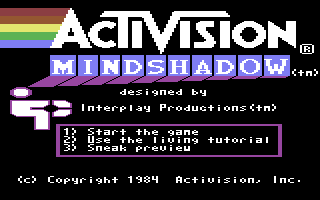
    Mindshadow was first released in 1984 and is essentially and illustrated text adventure game. The text adventure genre is perhaps best illustrated by Infocom and the Zork series. Adding illustrations was basically the next step in the evolutionary development of these games. This game was developed by Interplay and published by Activision.
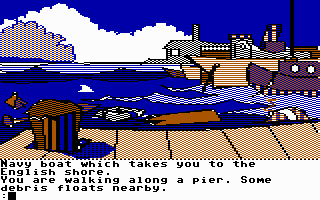
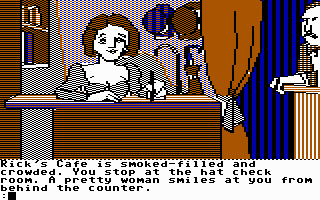
    A text adventure game (or interactive fiction as they were sometimes called) basically described the scene in front of you and then you would have to enter commands (e.g. “go north”, “take sword”, “hit troll with sword”, etc.) then the results would be described to you. Games like Mindshadow worked the same way, they just provided some pictures to go along with the text. This type of game can be extremely fun though they are not particularly replayable. They were also unique in that they were exclusively available on home computer systems vs. video game consoles (for obvious reasons). However, the point and click adventure is not too far removed from this type of game.
    Mindshadow, though not necessarily the best, was an above average example of the graphics adventure genre. Reviews were mixed but generally positive for the most part. Honestly, while I enjoyed the occasional text adventure game (especially Zork), it was never really my favorite genre. They never felt long enough (except when you were just stuck and frustrated) and to me, they had zero replayability. I can read novels multiple times (at least some of them) but playing these types a games a second time was just boring. Unless maybe you waited long enough to completely forget it.
    Mindshadow has an interesting lineage. One of the game’s programmers (Allen Adham) would later go on to found Blizzard. Another interesting fact about Mindshadow is that it is loosely based on Robert Ludlum’s novel, The Bourne Identity. You can sort of think of this game as an interactive version of that novel.

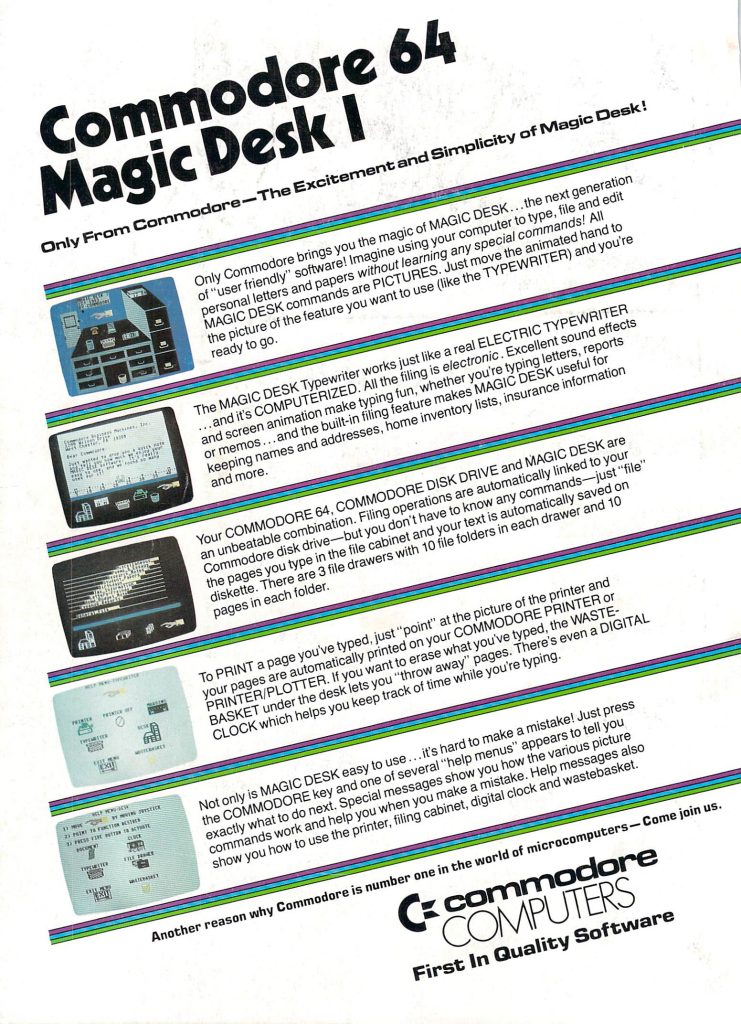
    Mindshadow here is advertised for the Commodore 64, Apple II, Atari 8-bit, PC, and PCjr. It would also be available for the Amiga, Amstrad CPC, Atari ST, Macitosh, and ZX Spectrum. There aren’t really any modern re-releases though it was released in CD format as part of Interplay’s 10 Year Anthology, a collection of ten classic DOS games from Interplay that also includes such classics as The Bard’s Tale, Wasteland (the real first game in the Fallout series), Battle Chess, Out of this World, and other classics. However, this collection was released in 1993 and these games are in their original DOS format so in any case you will need a computer capable of running DOS or use some kind of emulation to be able to play this game. If you are looking to give the graphics adventure genre a try, you could do worse.
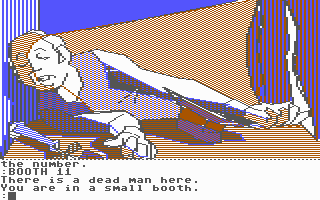
    Screen shots above are from the Commodore 64 version of the game.
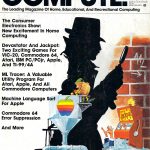

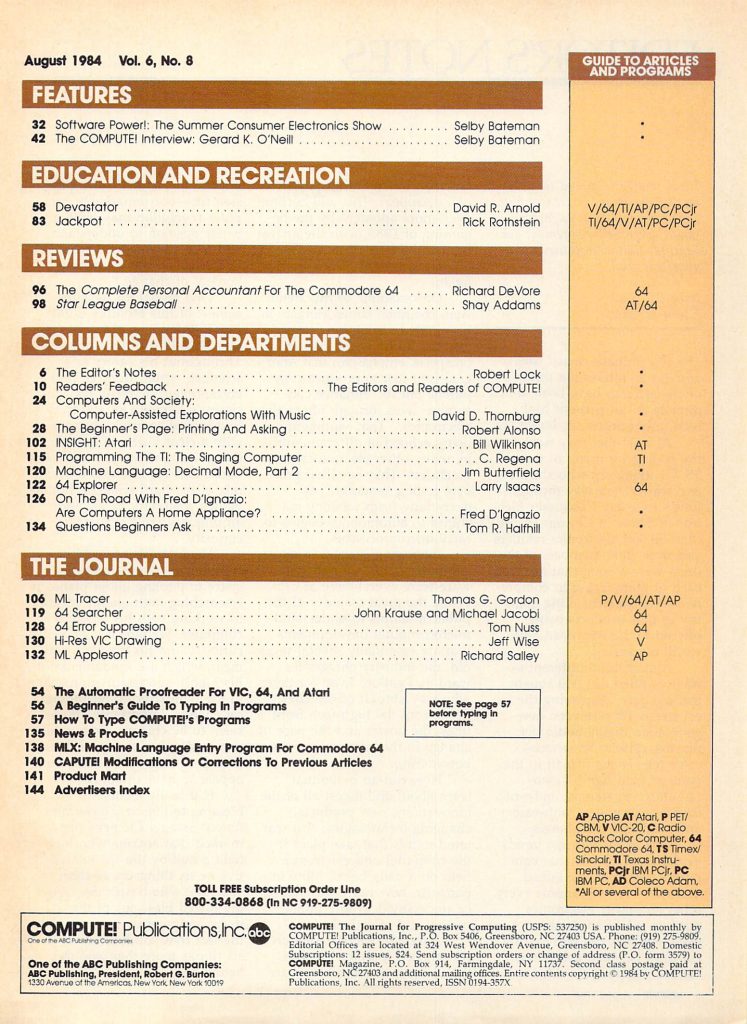
  • Compute! (August 1984)

    Compute! was one of the more popular home computer magazines of its time. It wasn’t as technical as something like Byte and it concentrated on the machines most potential users would be buying for their home. The August 1984 issue includes:

    Features

    • Software Power!: The Summer Consumer Electronics Show – While some new computers and other hardware were introduced at the Summer CES, there was also a lot of new software. Some machines made debuts privately like the Amiga Lorraine prototype, a new advanced 8-bit computer from Atari, and MSX based computers due to hit the U.S. Commodore also introduced the Plus/4 and C-16 (both of which went nowhere). Coleco was also pushing the Adam which was introduced 6 months earlier. There were also tons of games and other software for the Commodore 64, Atari, and Apple II among others.
    • The COMPUTE! Interview: Gerald K. O’Neill – The head of a company called Geostar Corporation which was a computer-based satellite positioning and communications company.

    Education and Recreation

    • Devastator – A type-in game in which you must destroy an alien invasion force before it destroys Earth. Originally written for the VIC-20 with versions included for the Commodore 64, Color Computer, TI-99/4A, Apple II, and PC.

    • Jackpot – A type-in slot machine simulator for the Ti-99/4A, Commodore 64, VIC-20, Atari, and PC.

    Reviews

    • The Complete Personal Accountant For The Commodore 64 – A sophisticated accounting package for the Commodore 64 that includes ten separate programs.
    • Star League Baseball – An excellent baseball sim for its time for the Commodore 64.

    Columns and Departments

    • The Editor’s Notes – An editorial on the Summer Consumer Electronics Show.
    • Readers’ Feedback – Readers write in about Commodore 64 memory, Pascal for the Apple II, Atari checksum errors, using the stack, slowing screen output on the Commodore 64, and more.
    • Computers and Society: Computer-Assisted Explorations With Music – Teaching people to compose music with computers. This article concentrates on a software product called Musicland for the Apple II.
    • The Beginner’s Page: Printing And Asking – Printing special control codes (e.g. cursor movement) in BASIC by using CHR$ and ASCII values.
    • INSIGHT: Atari – Using the Atari 1050 disk drive enhanced density mode.
    • Programming The TI: The Singing Computer – Using the TI Speech Synthesizer to make the TI-99/4A sing.
    • Machine Language: Decimal Mode, Part 2 – Some of the bugs and pitfalls with using decimal mode in machine language on the Commodore 64 and VIC-20.
    • 64 Explorer – Printing characters to a bitmapped display by drawing it.
    • On The Road With Fred D’Ignazio: Are Computers A Home Appliance? – I don’t think computers have really ever been an “appliance”. More like a personal device similar to a mobile phone.
    • Questions Beginners Ask – Questions answered about plugging all computer peripherals into the same wall socket via a power strip and transporting a computer by plane.

    The Journal

    • ML Tracer – A type-in program for the Atari, Apple II, and Commodore computers that allows you to step through machine language programs.
    • 64 Searcher – A type-in program that allows you to search through you BASIC program for the string of your choice.
    • 64 Error Suppression – Avoiding error messages and system freezes when an error occurs on the Commodore 64.
    • Hi-Res VIC Drawing – A guide to drawing hi-res images on the VIC-20.
    • ML Applesort – A type-in machine language program for the Apple II that will sort an array of any length.
    • News & Products – The Drum-Key music interface board for the Apple II, an RS-232 modem adapter for Atari, Graphics Master for the Commodore 64, the Networker communications package for the Apple II, the Creative Electronics lighte pen for the Commodore 64 and VIC-20, and more.

    …and more!


  • Compute!’s Gazette (February 1987)

    Compute!’s Gazette was one of the most popular Commodore 64 magazines and 1987 was quite possibly the Commodore 64’s peak year. The February 1987 issue of Gazette includes:

    Features

    • Deciding on the Right Printer – Features to consider when deciding on the right printer for you.
    • A 1987 Buyer’s Guide to Printers – Features are compared for tons of printers including the Aprotek Daisy 1120, Blue Chip 120/NLQ, Brother HR-20, C. Itoh Prowriter C-215XP, Canon A-50, Citizen 120D, Commodore MIPS 1200, and dozens of others.
    • Printing Commodore Graphics – A guide to printing Commodore graphics with various printing modes, interfaces, and non-Commodore printers. Includes some programming examples.

    Reviews

    • Where in the World is Carmen Sandiego? – One of the most iconic educational games ever made.
    • Macbeth – An adventure game based on the Shakespeare play.
    • PaperClip II – A popular word processor with a 38,000 word spell checker that can be expanded.
    • Ace of Aces – The classic World War II flight sim from Accolade. This was one of the games I bought for my Commodore 64
    • Transformers: Battle to Save the Earth – While most licensed games aren’t very good, this one was produced by Activision and is better than average.

    Games

    • Collision Course – A type-in racing game in which you must clear a course of dots before the computer controlled car runs into you.
    • Pick-A-Letter – A type-in word game somewhat similar to Hangman but with some enhancements. For the Commodore 64/128, Plus/4 and C-16.

    Education/Home Applications

    • Division Worksheet – This type-in program creates math worksheets with division problems.
    • Computing for Families: Light! Computers! Action! – Training teachers to use personal computers to enhance videos for educational use.

    Programming

    • Hints & Tips: Replacing Arrays – Some tips for using arrays and alternatives in BASIC.
    • Power BASIC: Sanitation Engineer – A type-in machine language program that speeds up garbage collection.
    • MetaBASIC: The Programmer’s Assistant – A type-in enhancement for BASIC that was previously published by Gazette. A Plus version is included that has 11 new commands as well as a Commodore 128 version.
    • Mastering 128 Sound and Music, Part 5 – The final part of this long running series provides advice on different methods of transcribing music written for three or more voices.
    • 128 Wedge – A type-in utility to make it easier to use a 1541 or 1571 disk drive with the Commodore 128.
    • Data Formatting on the 64 – Some short programs for formatting data by performing such actions as rounding and right justification of numbers.
    • BASIC for Beginners: IF-THEN – A tutorial and some examples using IF-THEN.
    • Machine Language for Beginners: ML Mailbag – Answering a few machine language related questions from readers.

    Departments

    • The Editor’s Notes – Commodore introduces the PC10-1 PC clone to the U.S. market.
    • Gazette Feedback – Letters from readers about screen formatting, finding free disk blocks, 1571 bugs, upgrading CP/M, and more.
    • Horizons: Art or Science? – Pondering whether programming is an art or a science.

    …and more!