• Tag Archives DOS
  • Zephyr (DOS, 1994)

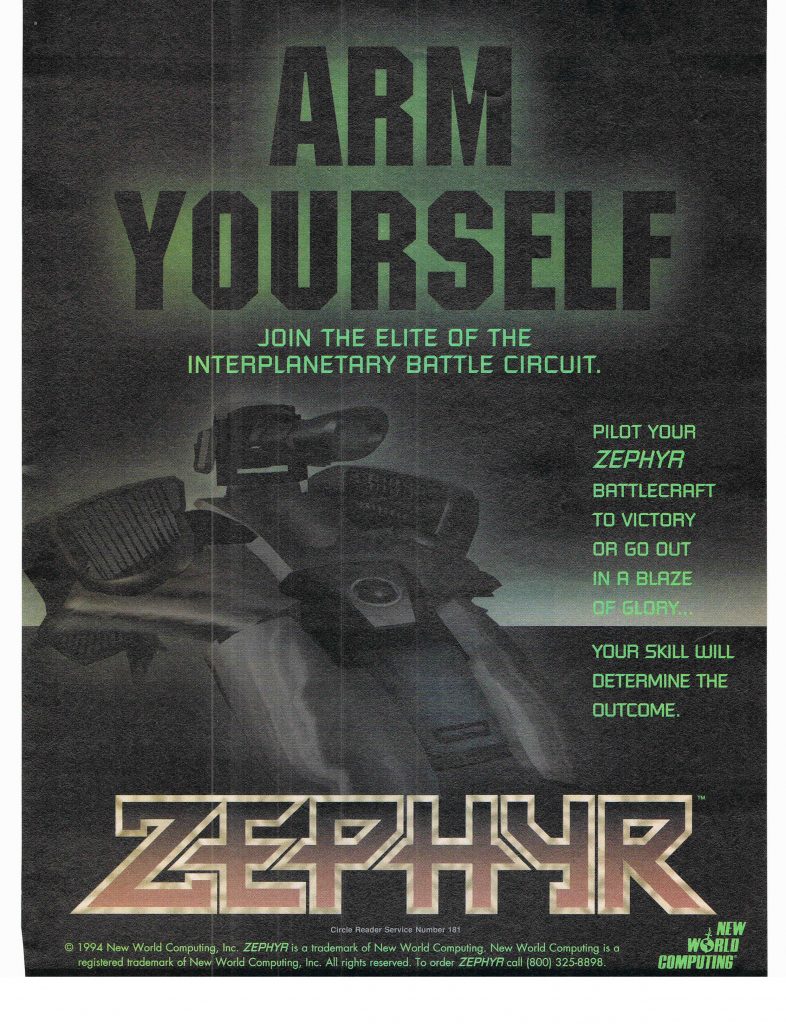
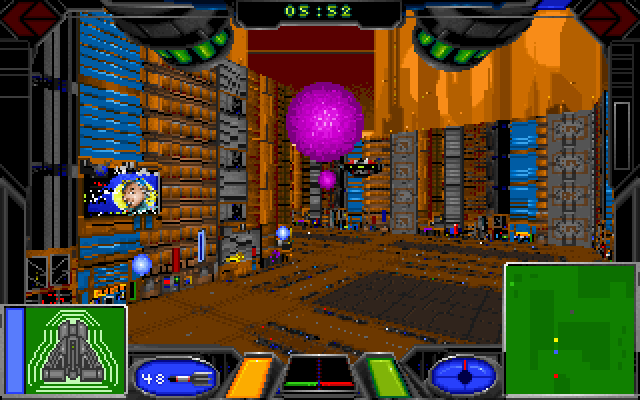
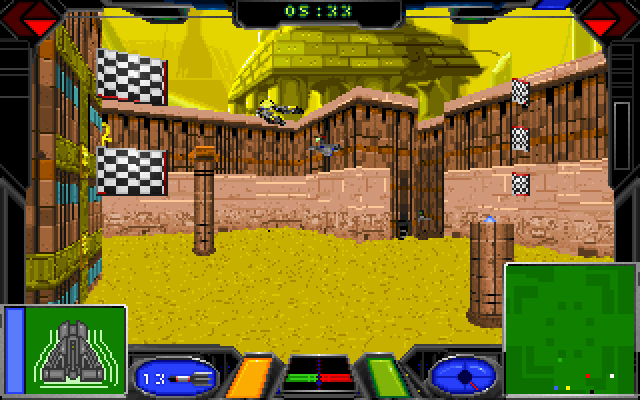
    Zephyr is a relatively obscure game that was released by New World Computing in 1994 for DOS based PCs. This is essentially a first person vehicular combat game. New World Computing was much better known for its Might and Magic series and this game certainly didn’t change that.

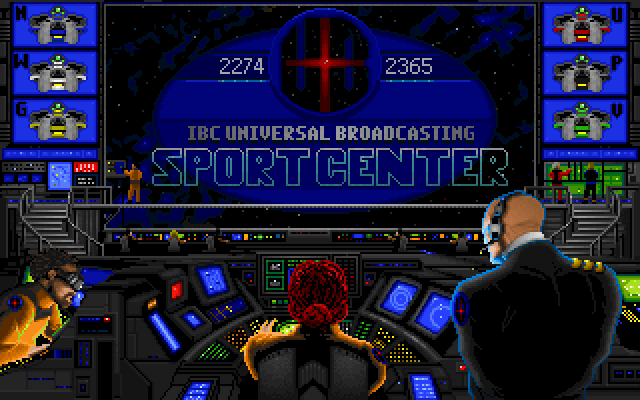
    The plot of the game is that you are in the 24th century and resources are fought over via vehicular combat. You represent one of several massive corporations (New World Computing is one of the choices). Your vehicle is best described as a kind of hover bike. You must do battle against representatives from other corporations in various arenas.

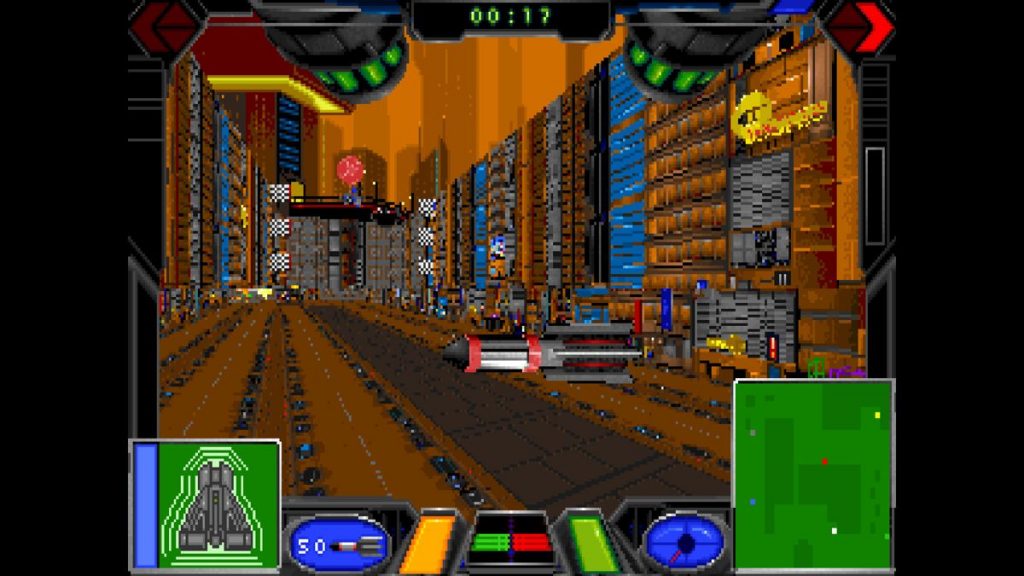
    Game play is pretty straight forward. Before each match, you get to configure your “drone” with various weapons and equipment. Resource management is an important aspect of the game as things like ammunition are not unlimited. However, there are various power ups that can be collected during battle.

    The graphics in sound aren’t terrible but they were nothing spectacular either, even for the time. A combination of polygons and sprites were used which was common for the time. While not overly impressive, the game was not hampered by the graphics as your environment, enemies, power-ups, etc. can all be clearly identified. Sound effects and music were pretty generic. They were functional but definitely didn’t stand out.

    The one somewhat innovative aspect of this game was the multiplayer option. It allowed for both LAN and modem play against other players. While not entirely unique for the time, this was not yet commonplace either. This really adds to the playability of the game, at least if you had friends you could play against via modem/LAN.

    Reviews were at best average for this game. The mediocre graphics, sound, and music were a factor but it was the repetitive nature of the game that really hurt it. There wasn’t really enough variety in terms of weapons, arenas, or enemies for any long term replayability. As mentioned above, the multiplayer was the one bright spot. “Online” multiplayer games weren’t all that plentiful in 1994 so if you were looking for another, this wouldn’t have been a terrible choice. At least as long as you weren’t too concerned about the single player game.

    Your probably better off sticking with games like Doom, Doom II, Heretic, Descent, etc. if you are looking for a similar type of game with online play from that era. However, if you want some variety, this wouldn’t be a terrible choice for some retro multiplayer action. As far as I know, you’ll have to pick of an original and play on an original DOS based PC or use something like DOSbox. You can in fact pick this game up on GOG ($6.99) and probably Steam which provides the advantage of working on modern platforms. However, I don’t think these versions support multiplayer and that happens to be the best part of the game.

    The ad above is from the May 1994 issue of Compute.


  • PC Magazine (August 1982)

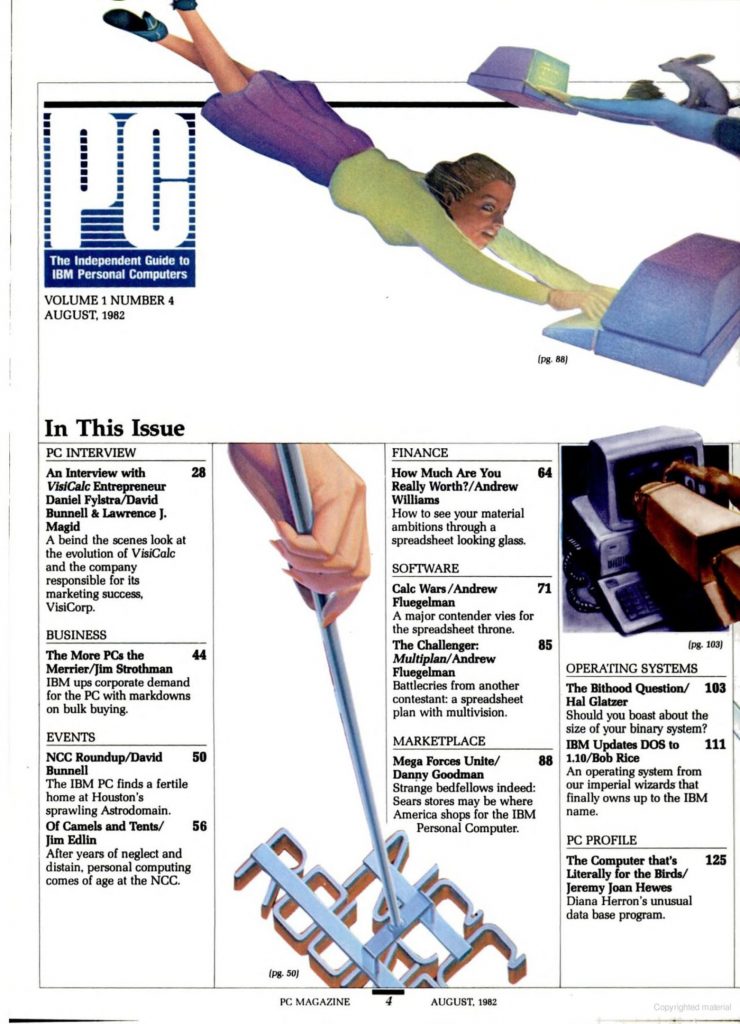
    The IBM PC was a year old when this issue of Pc Magazine was on the stands. Going by page count, which was over 225 pages for this issue, there was already a ton of advertising behind PC products. The August 1982 issue of PC Magazine includes:

    PC Interview

    • An Interview with VisiCalc Entrepreneur Daniel Fylstra – A look at the history of VisiCalc and VisiCorp.

    Business

    • The More PCs the Merrier – IBM offers discounts on very large purchases (in the hundres or thousands of units).

    Events

    • NCC Roundup – A look at what was to be seen at the National Computer Conference in Houston, Texas.
    • Of Camesl and Tents – A look back at the past five years of the NCC and personal computing.

    Finance

    • How Much Are You Really Worth? – Calculating your net worth with a PC and spreadsheet.

    Software

    • Calc Wars – Testing SuperCalc and comparing it to VisiCalc.
    • The Challenger: Multiplan – A review of Multiplan, Microsoft’s new spreadsheet program.

    Marketplace

    • Mega Forces Unite – Sears introduces 45 new business centers with the IBM PC as the lead item.

    Operating Systems

    • The Bithood Question – 8- vs. 16- vs. 32-bit CPUs.
    • IBM Updates DOS to 1.10 – DOS 1.10 added features such as the ability to handle dual-sided 320K disk drives, improved disk I/O speed, improved copy and dir commands, and more.

    PC profile

    • The Computer that’s Literally for the Birds – How one ornithologist uses a custom database program and VisiCalc to keep track of bird data.

    Communications

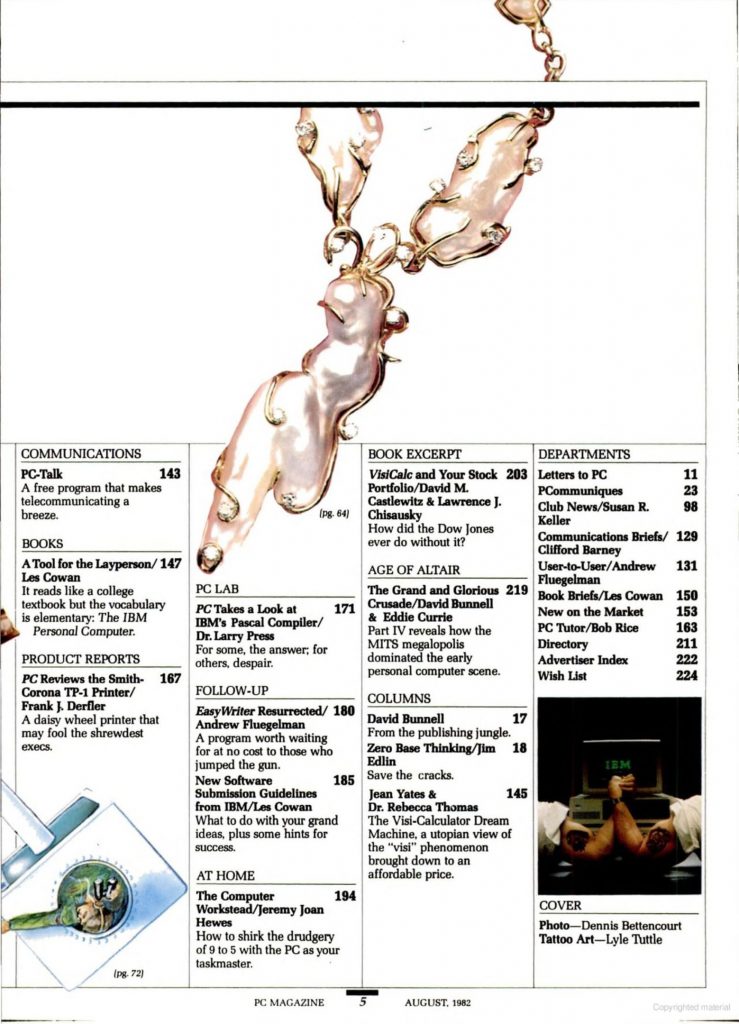
    • PC-Talk – A free communications program for the PC.

    Books

    • A Tool for the Layperson – A review of the book IBM Personal Computer: An Introduction to Programming and Applications.

    Product Reports

    • PC Reviews the Smith-Corona TP-1 Printer – A letter quality daisy wheel printer for about $700.

    PC Lab

    • PC Takes a Look at IBM’s Pascal Compiler – A review of this early Pascal compiler for the PC.

    Follow-Up

    • EasyWriter Resurrected – A look at this improved version of the EasyWriter word processor.
    • New Software Submission Guidelines from IBM – Highlights of IBM’s new software submission guidelines for those that want to try to have their software sold by IBM.

    At Home

    • The Computer Workstead – Working at home with your PC.

    Book Exerpt

    • VisiCalc and Your Stock Portfolio – An excerpt from VisiCalc Home and Office Companion.

    Age of Altair

    • The Grand and Glorious Crusade – One in a series of articles about the history of the Altair computer.

    Columns

    • David Bunnell – The software publishing jungle.
    • Zero Base Thinking – How e-mail systems help to keep things from falling through the cracks.
    • Jean Yates & Dr. Rebecca Thomas – An idea for a low-cost dedicated VisiCalc machine.

    Departments

    • Letters to PC – Letters from readers about adding a customer service card, copy protected software, IBM employee sales, adding a an MP1 B51 drive to the PC, speeding up disk drive access, and more.
    • PCommuniques – Keeping your PC cool; reduced price 64K expansion board; Zork released for the PC; electronic greeting cards; King James Bible released on disk; successor to the PC may have 8087 math coprocessor; four new computers announced that are software compatible with the PC; and more.
    • User-to-User – A look at the bugs fixed in the V1.05 update to BASICA, BASIC programming tips, PASCAL tips, printing with the NEC Spinwriter 3530, and more.
    • Book Briefs – A look at new books including A User Guide to the UNIX System and Introduction to WordStar.
    • New on the Market – A brief look at new PC related products including 64K-256K memory boards from Micro Match, the Intel 8087 Chip, the DataSouth DS180 dot matrix printer, a joystick from TG Products, the Move-It communications program, and more.
    • PC Tutor – Using an autoexec.bat file, solving double character problems with The Source and the IBM Asynchronous Communications Support program, and more.

    …and more!


  • Compute! (September 1985)

    Compute! was probably the best magazine for the average computer user in the early to mid 1980s and perhaps beyond. At least if you had an interest in more than one platform. Compute! covered all of the popular home computers of the time and there were a bunch in 1985 including the Commodore 64, Apple II, Atari 8-bit, PC, TI-99/4A, the brand new Amiga and Atari ST, and probably others. The September 1985 issue includes:

    Features

    • The Amiga: An In-Depth Review – A detailed look at the new Amiga (Amiga 1000) from Commodore. It was due to be released in August.
    • The Electronic University – While it took a while for online education to really take off, it is far from new. This article tells the story of one family who is using their Commodore SX-64 to earn online degrees.
    • The Last Warrior – A type-in arcade style action game for hte PC, Commodore 64, Atari 400/800, and Apple II.

    Reviews

    • Rescue on Fractalus! and Ballblazer – Reviews of these two classic Lucasfilm games for Atari 8-bit computers.
    • Below the Root – An adventure game for the Commodore 64 based on the Green Sky Trilogy of books.
    • Companion – A word processing program for the TI-99/4A.
    • Jr-Draw for PCjr – An art program designed for the PCjr that can optionally use a light pen.

    Columns and Departments

    • The Editor’s Notes – A discussion of the Amiga, BASIC, machine language, and the C programming language.
    • Readers’ Feedback – Letters from readers about relational operators, Atari tape to disk transfer, adding beeps to key presses on the Commodore 64, unlocking IBM PC BASIC programs, and more.
    • HOTWARE: Software Best Sellers – Best selling software this month includes Flight Simulator II (Entertainment), Math Blaster! (Education), and Print Shop (Home Management).
    • The Beginner’s Page: Forget Your Algebra – It turns out you don’t need an extensive math background to program a computer.
    • Computers and Society: Compilers, Interpreters, and Flow: Conclusion – How different compilers and interpreters affect program flow and complexity.
    • Telecomputing Today – SIG Wars – Special Interest Group sysops switch between services while those services claim ownership of all messages and uploaded files in a SIG.
    • The World Inside the Computer: A Robot Toddler – A look at the Herojr personal robot.
    • IBM Personal Computing: The Mysterious Editors – A look at the editors that IBM provides with its PCs including BASIC, DEBUG, and EDLIN.
    • Programming the TI: The OPEN Statement – Some examples of using the OPEN statement on the TI-99/4A.
    • INSIGHT: Atari – Using Serial Input/Output – A look at how printing and disk access works via SIO.

    The Journal

    • Commodore 64 Memory Manager – A type-in program for the Commodore 64 that allows you to load multiple BASIC programs into memory at once and switch between them.
    • Saving Time and Memory: An Atari Variable Utility – A set of type-in utilities for the Atari 8-bit that allows you to list, rename, and abbreviate variable names in BASIC programs.
    • Commodore 64 Disk Commander – A type-in utility for the Commodore 64 that makes disk access more convenient.
    • Apple Fractals – A type-in program for generating fractals on the Apple II.
    • Chess for IBM PC & PCjr – A type-in chess program for the PC and PCjr based on an earlier published version for other machines.
    • Commodore Bootstrapping – A tutorial and demo for how to load programs that are divided into multiple parts on the Commodore 64, VIC-20, C16, PET/CBM, and Plus/4.
    • Atari Animation with P/M Graphics, Part 1 – The first part of an animation tutorial for the Atari 8-bit using Atari’s Player/Missile graphics.
    • All About IBM Batch Files, Part 1 – The first part of a tutorial for using DOS batch files.
    • Jump Search – A demonstration of binary search on the Atari 400/800, Apple II, IBM PC, Commodore 64, TI-99/4A, and Color Computer.
    • 128 Sound and Music, Part 2 – This part explores the Commodore 128’s FILTER, SOUND, and PLAY commands.
    • Easy Apple Screen Editing – A type-in screen editor for the Apple II.


    …and more!