• Tag Archives retrocomputing
  • The Commodore Amiga 2000

    The Commodore Amiga 2000

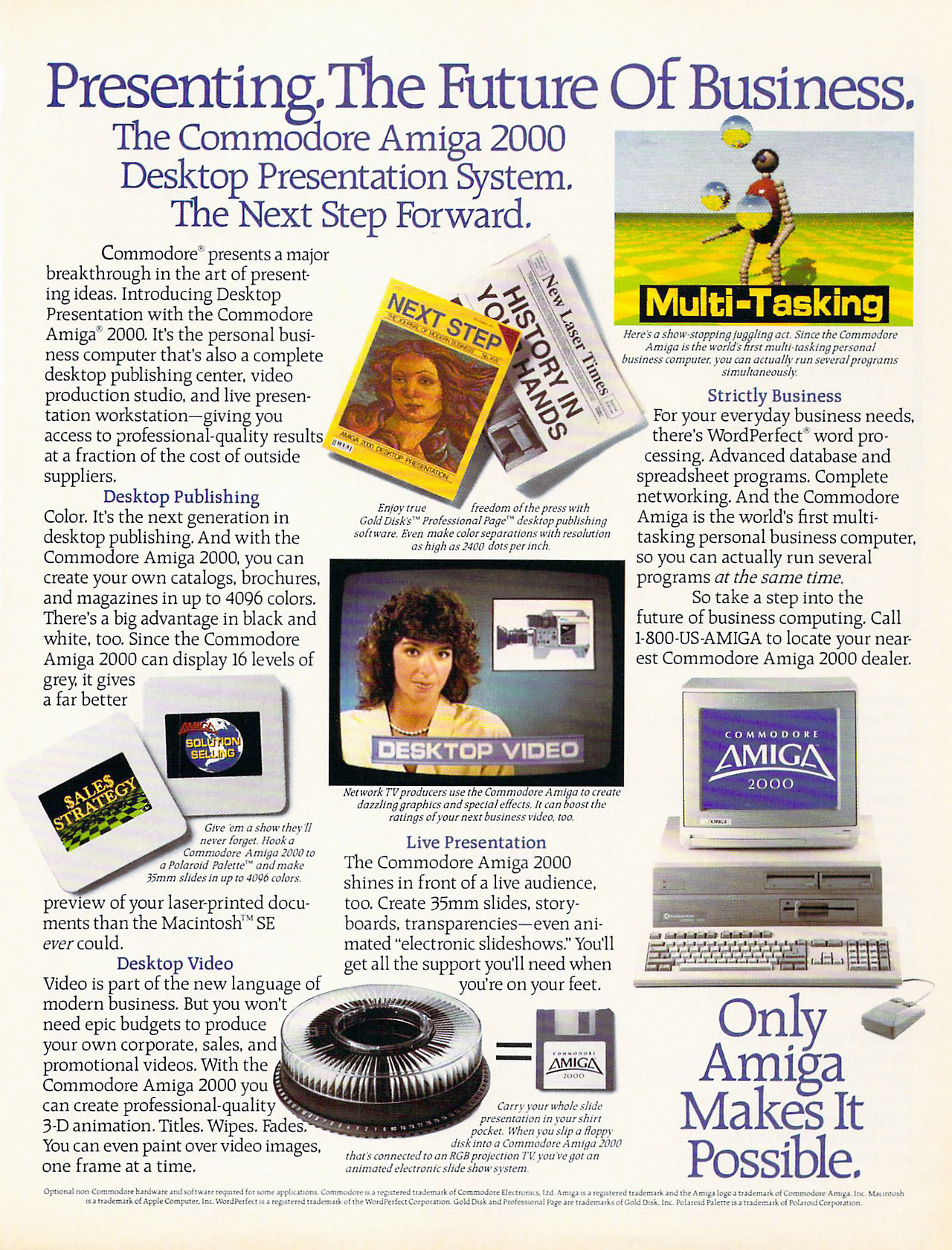
    http://darth-azrael.tumblr.com/post/171824830828/retrocgads-usa-1988-amiga-2000

    When I had my Commodore 64, the Amiga was the computer I always dreamed of upgrading to one day. By the time I actually got around to upgrading, Commodore was almost dead and it just didn’t seem like a wise purchasing decision as I was going off to college. I bought a 486 DX2-66 instead. No regrets but I still wish I had that Amiga back in the day.

    The Amiga 1000 was the original model released in 1985. It featured a 7.16 MHz Motorola 68000 processor along with 256 KB of RAM, custom chips for graphics and sound, and a custom multitasking OS called Amiga OS. It was not a cheap machine but it was an incredible value for what you got. It was succeeded two years later by two models: The Amiga 500 and the Amiga 2000. The core hardware mentioned above was still the same in both with 512 KB now being the standard amount of RAM on the Amiga 500 and 1 MB on the Amiga 2000. The Amiga 500 was by far the most popular Amiga model. It was a cost reduced all-in-one unit that was popular with home users. It had the same basic abilities as the Amiga 1000 at a much lower cost.

    While the Amiga 500 was the most popular Amiga for home users, it was probably the much more expensive and expandable Amiga 2000 (in the 1988 ad above) that made the Amiga a success in the professional world, particularly for video production, editing, special effects, and other video uses. While the Amiga 2000 started with the same core hardware as the Amiga 1000 and Amiga 500, it was much more expandable, containing five Zorro II expansion slots, four PC ISA slots as well as easier memory and CPU upgrade options. It also included two 3.5″ and one 5.25″ drive bay.
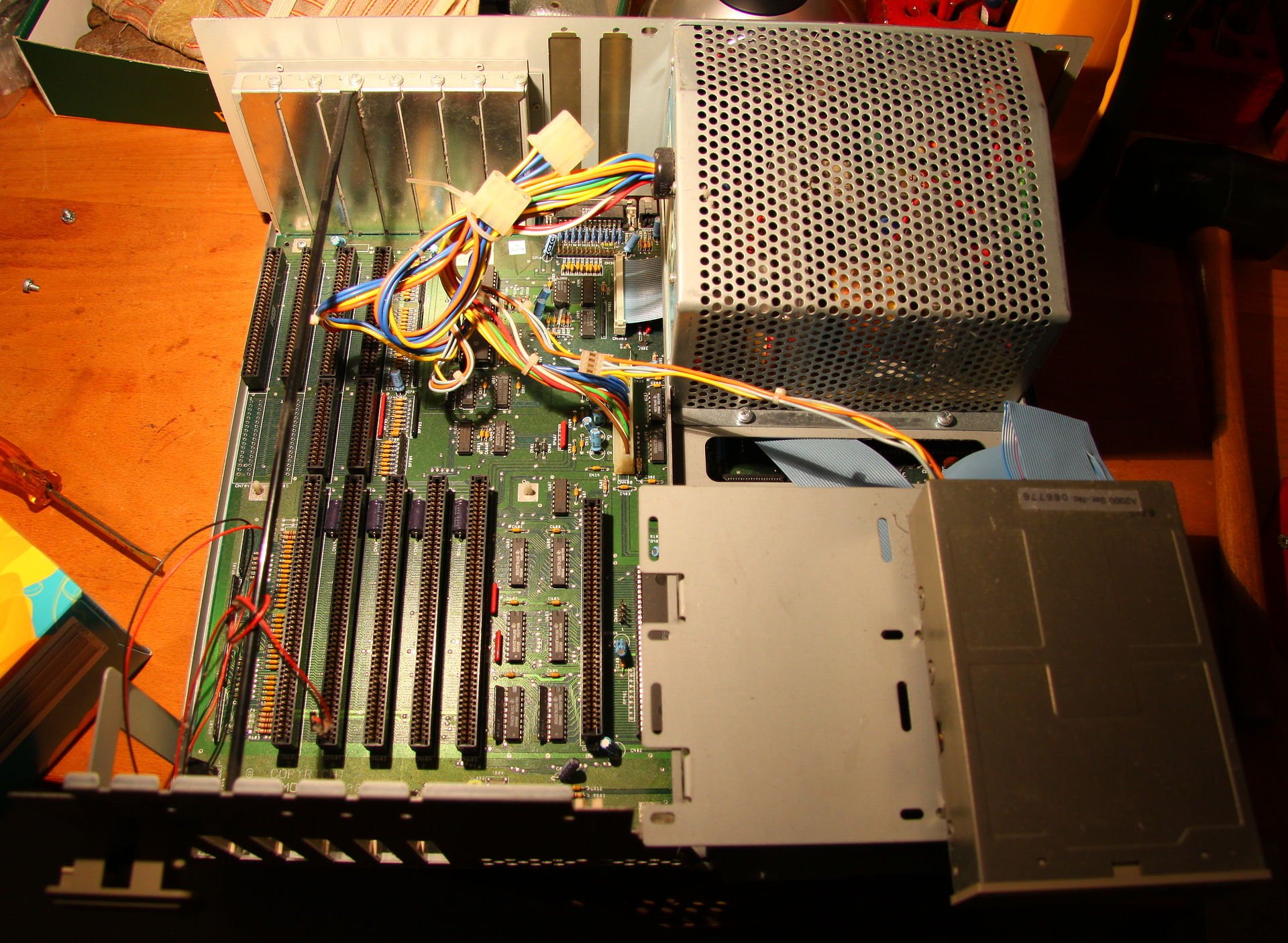
    The Zorro II slots were designed for the Amiga and provided a buffered extension to the Motorola 68000 bus. Zorro II cards used a protocol called Autoconfig that automatically assigned resources without jumper settings. This was similar to plug-and-play with PCI cards but was developed well before that. There were a vast array of Zorro II cards (a list of nearly 300 can be found here: http://amiga.resource.cx/search.pl?intf=z2) including network controllers, digital signal processors, graphics cards, SCSI cards, memory cards, and of course the immensely popular Video Toaster for video editing and just about anything else you can think of. Various PC bridge cards with processors ranging from the 8088 to the 486 were also available. These combined with the ISA slots in the Amiga allowed it to also become an expandable PC. The best part was that you could run DOS (or Windows) programs in an Amiga OS window so you weren’t restricted to only running one or the other at the same time.

    In addition to these expansion slots there was also a CPU slot used for CPU upgrades. There were two offical Commodore expansions for this slot as well as a variety of third party options. The original 68000 could be upgraded in this manner to a 68020, 68030, 68040 or even 68060. These boards often had their own RAM expansion capabilities.

    The Amiga 3000 eventually succeeded the 2000 but the Amiga 2000 was on the market for four years until 1991. Several variations were available during that time including the Amiga 2000HD which included a 3.5″ SCSI hard drive and controller, the Amiga 2500 which was an Amiga 2000 with Commodore’s A2620 68020 CPU card and hard drive, the Amiga 2500/30 which was an Amiga 2000 with Commodore’s A2630 68030 CPU card and hard drive, the Amiga 2500UX which was a unix variant with a tape drive, and others.


  • Special Forces (Atari ST)

    Special Forces (Atari ST)

    http://darth-azrael.tumblr.com/post/171706405591/ataricrypt-my-latest-atari-st-purchase-was

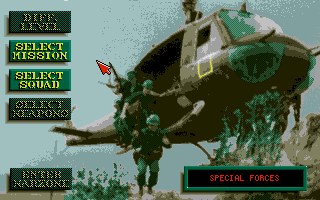
    While I’m pretty familiar with MicroProse’s Airborne Ranger, I was less familiar with its sequel, Special Forces. Part of this is probably because in 1992 when Special Forces came out, I was still using my Commodore 64. Game releases for the C64 were very few and far between by that time and Special Forces was not one of them. It was released for the Atari ST, DOS and Amiga.


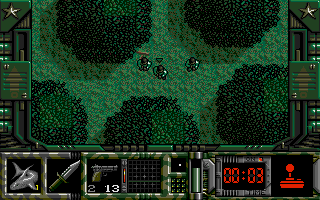
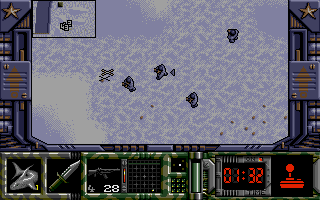
    Special Forces shares several similarities with its predecessor. The box artwork is similar, the overhead point of view in the game is also similar. However, there are some differences. While Airborne Ranger had a strategic element, it was really more of an action game. Special Forces on the other hand is much more of a strategy game. In Special Forces, you command a team of four squad members chosen from a squad of eight, each with different abilities. Missions can then be chosen from different regions with day and night variations. There are many possible objectives including rescuing hostages, search and destroy, and recon among others. You do not control the squad members directly but instead issue orders to them.


    Overall, Airborne Ranger was an excellent game and Special Forces lived up to its predecessor for the most part. They are slightly different types of games but share enough similarities that if you like one, you will probably like the other. These were arguably the first games that you could say fell under the tactical shooter category and were fairly unique for their time.


    If you want to give Special Forces a try, you will have to break out your Amiga, Atari ST or old DOS box or resort to emulation. As far as I know this game has never been re-released and there have been no further direct sequels. It’s worth a try though…MicroProse made some pretty great games and this one does not disappoint.

    All images above pertain to the Atari ST version of the game.


  • Tandy TRS-80 MC-10

    The Tandy TRS-80 MC-10 was Tandy’s attempt to compete with the Commodore VIC-20. Released in 1983 and based on the TRS-80 CoCo 1, this machine retailed for a paltry $119.99, which did not give you much at all. It used a Motorola 6803 CPU clocked at 890KHz (that’s under a megahertz!) with 4K RAM and 8K ROM featuring BASIC. It could do color video with the same MC6847 found in the proper CoCo system, and be upgraded to 20K RAM with an addon.

    However, it was a complete and total mess. In 1983, a new microcomputer was expected to have things like:

    • Full travel keyboards
    • Disk drive support
    • Medium resolution graphics
    • 64K of memory

    This system has a chiclet keyboard, only used cassette tapes, low resolution graphics, and barely any memory. It also has really bad RS-232 serial functionality. The 6803 CPU has a built-in UART, so it SHOULD be able to do it without needing any special hardware or hacks. But the engineers only provided one timing crystal – a 3.58 MHz TV colorburst crystal to properly generate video – which did not divide correctly for serial communication timing. Instead, all serial communications are done manually in software, which results in a very unstable and difficult-to-use connection. The MC-10 was canned in 1984, less than a year after it was released. Now, what to do with all that unused stock…

    http://darth-azrael.tumblr.com/post/171535130100/tumblokami-the-tandy-trs-80-mc-10-was-tandys

    Tandy produced a confusing array of incompatible computers with the TRS-80 label. First up was the main TRS-80 line that started with the TRS-80 Model I and continued through the Model IV many years later. These were all essentially compatible with each other. Then there was the TRS-80 Color Computer line. This was a completely different line of computers that was incompatible with the first though they were sold at the same time. The Color Computer line eventually dropped the TRS-80 designation and was just known as the Tandy or Radio Shack Color Computer or CoCo for short. The last in that line was the CoCo 3.


    Then there were the one-off machines that weren’t compatible with anything else. There were a number of these. The one pictured above is the TRS-80 MC-10. It was basically a scaled down version of the Color Computer meant to compete with inexpensive computers like the Commodore VIC-20 and the Sinclair ZX-81. Released in 1983, it was really much too little and too late. By 1983 the VIC-20 was on its way out in favor of the Commodore 64, a much more advanced machine. The same was true of the ZX-81 which never had a huge amount of success in the U.S. anyway.


    The TRS-80 MC-10 had a number of big disadvantages. While it was only $120, the VIC-20 was already (or would soon be) $99. The VIC-20 only had a 22-column display (without add-ons) but it had excellent hardware and software support and a much better keyboard. The MC-10 had basically the same graphics capability as the Color computer (based on the MC6847 VDG) but it used the less advanced Motorola MC6803 processor (as opposed to the 6809 in the Color Computer). This and other differences made almost all Color Computer software, even most BASIC software, incompatible with the MC-10. The MC-10 only ever had a very limited amount of cassette based software available for it.


    The MC-10 would only be on the market for about a year. By the time it was released in 1983, the world was moving on the bigger and better computers. The Apple II had already been around a while, the Commodore 64 and IBM PC had recently been introduced, and because of the Commodore instigated price war, Atari’s 8-bit computers and others were rapidly dropping in price. The MC-10 just didn’t have much of a market.

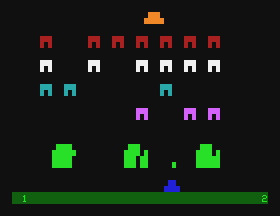
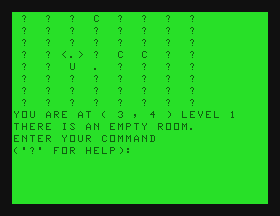
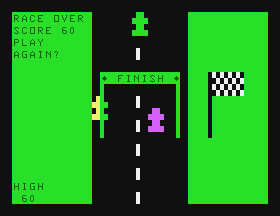
    For those that have an MC-10 or are interested in seeing what one was like in action, checkout http://faculty.cbu.ca/jgerrie/Home/jgames.htmlwhich has tons of mostly fan-made games (screenshots of a few above). For those with a real MC-10, most of these require the 16K expansion. However, there is also an emulator linked at the top of that page.