• Tag Archives Commodore 64
  • RUN: The Commodore 64 & VIC-20 Magazine (September 1984)

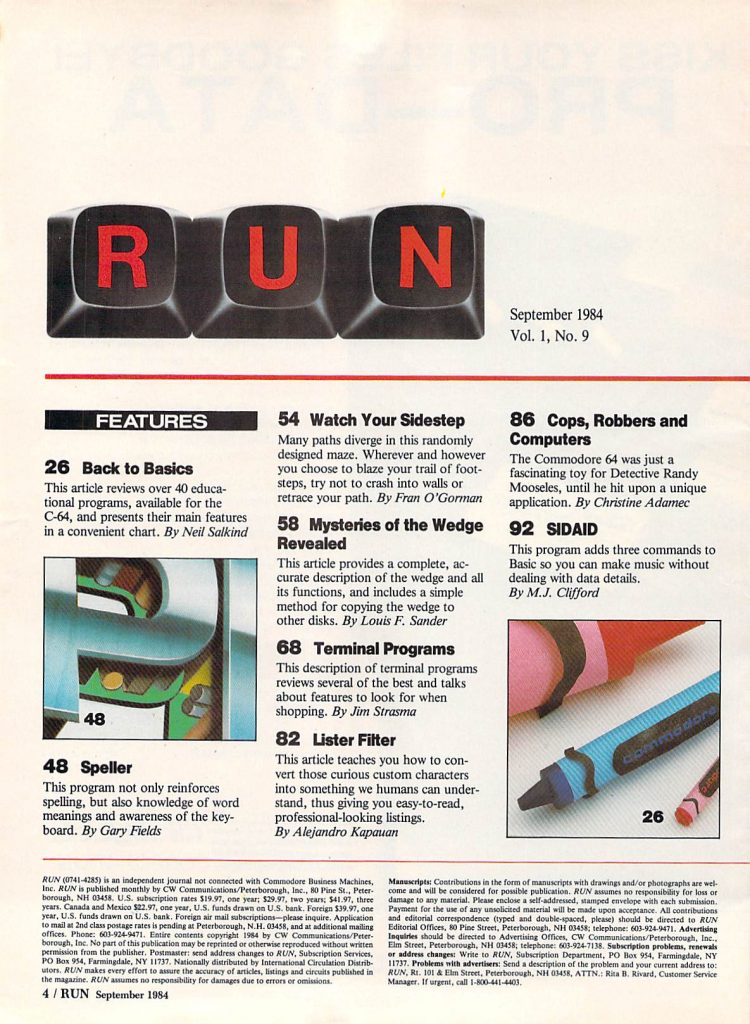
    RUN was primarily a Commodore 64 magazine though depending on the exact time period, it also covered the VIC-20, Plus/4, Commodore 16, and Commodore 128. The September 1984 issue includes:
    Features

    • Back to Basics – An overview of educational software available for the Commodore 64. Titles looked at here include Hodge Podge, ABC Fun, Spellbound, Young Folk Series, Fay: The Word Hunter, Funbunch-Elementary, Funbunch-Intermediate, Word Attack!, M-ss-ng L-nks, Word Spinner, Learning With Leeper, Preschool IQ Builder, Facemaker, Early Games for Young Children, Kids on Keys, The Factory, Moptown Parade, Fraction Fever, Multi-Beci, Meteor Multiplication, Demolition Division, Minus Mission, Alien Addition, Alligator Mix, Dragon Mix, Success With Math, Comparing Whole Numbers, Numer-Beci, 10 Little Robots, 123 Fun, Fay: That Math Woman, Ships Ahoy, Race Car ‘Rithmetic, Mathematics, MathWiz, Elementary Math Package, Challenge Math, Addition Magician, Add-Sub, Survival Math, Dungeons of the Algebra Dragons, and TEC4.
    • Speller – A type-in educational program that reinforces spelling, vocabulary, and keyboard skills.
    • Watch Your Sidestep – A type-in game in which you must make it through the maze without hitting a wall or retracing your steps.
    • Mysteries of the Wedge Revealed – A guide to the Commodore 64 DOS Wedge.
    • Terminal Programs – Reviews of seven terminal programs for the Commodore 64 and VIC-20 including Smart 64 Terminal, SuperTerm, Telstar, Vidtex, VIP Terminal, Graph-Term 64, ’64 Terminal, and Terminal 40.
    • Lister Filter – A type-in program that convert the Commodore 64s special graphics symbols to printable equivalent for printing program listings.
    • Cops, Robbers, and Computers – How one Melbourne, Florida police detective used his Commodore 64 and Superbase 64 to build a database of robberies and burglaries.
    • SID AID – A type-in program for the Commodore 64 that adds three new commands to BASIC to make creating music easier.
    Departments

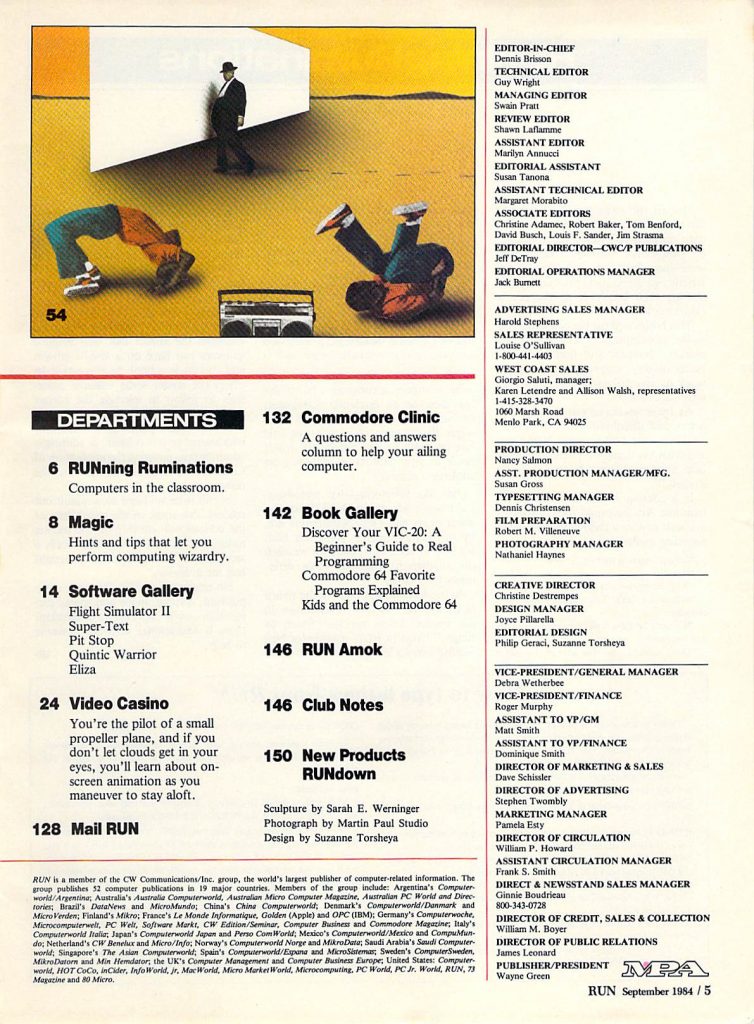
    • RUNning Ruminations – An editorial on educational software and computers in the classroom.
    • Magic – Tips and tricks for better typing, erasing a single line on the screen, finding the cursor, making the VIC-20 beep when you type, undocumented graphic characters, loading from cassette, and more.
    • Software Gallery – Reviews of Flight Simulator II (perhaps the most influential flight sim of all time), Super-Text (a word processor), Pit Stop (classic racing game from Epyx), Quintic Warrior (a not-so great arcade style game), and Eliza (from Artificial Intelligence Research Group).
    • Video Casino – A type-in game called Sky Pilot designed to teach you about animation on the Commodore 64 and VIC-20.
    • Mail RUN – Letters from readers about Comal, relative files, power surges, and more.
    • Commodore Clinic – Questions answered about screen printing, getting public domain software, drives that work with an IEEE-488 interface, 801 printer problems, using a 1540 disk drive with the Commodore 64, deleting files from disk, PET and Commodore 64 compatibility, converting Apple II BASIC programs to the Commodore 64, and lots more.
    • Book Gallery – Reviews of Discover Your VIC-20: A Beginner’s Guide to Real Programming, Commodore 64 Favorite Programs Explained, and Kids and the Commodore 64.
    • New Products RUNdown – A brief look at new products including a Dual 6522 Versatile Interface Adapter for real-time applications, the SA-1000 12″ amber monitor, and Star Wars: The Arcade Game for the Commodore 64.
    …and more!

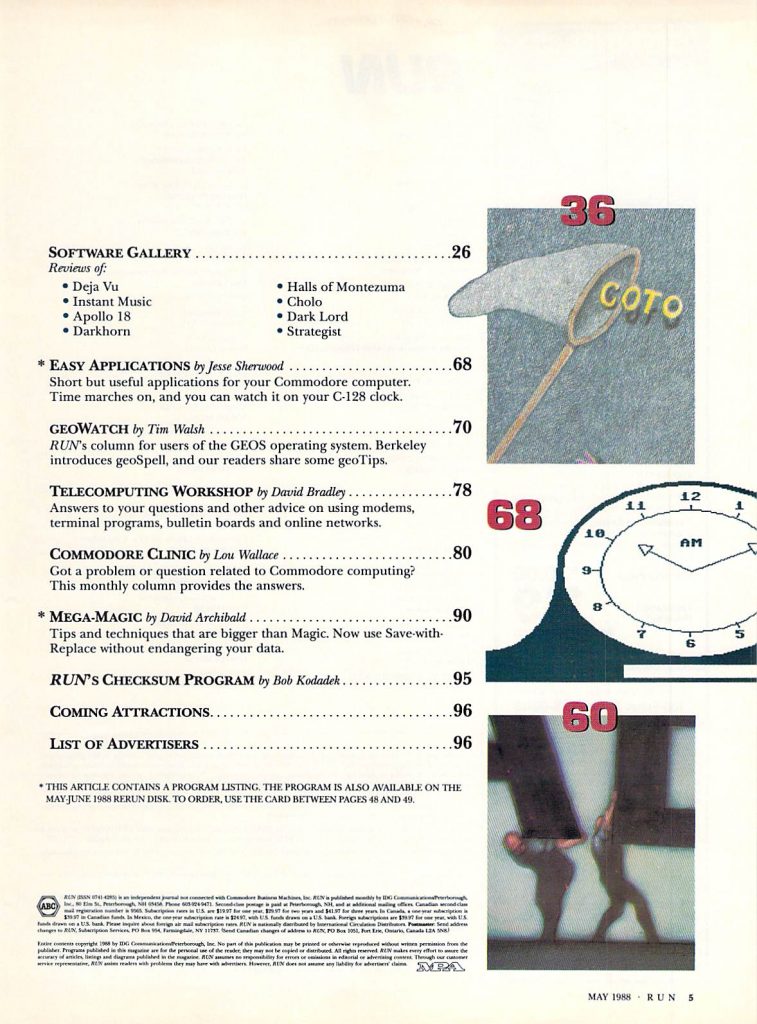
  • RUN: The Commodore 64/128 User’s Guide (May 1988)

    RUN was one of the Commodore 64 related magazines that I bought back in the day. However, I didn’t start buying it until pretty late in its life. Instead, I mostly picked up Commodore Magazine when I had the chance and switched to RUN when Commodore Magazine ceased publication. The May 1988 issue of RUN includes:

    • RUNning Ruminations – How the Commodore 64 has aged better than some PC models.
    • Magic – Short programming tricks for highlighting BASIC line numbers, rotating a box in ultra hi-res mode on the Commodore 128, partitioning disks on the 1581 drive, and more.
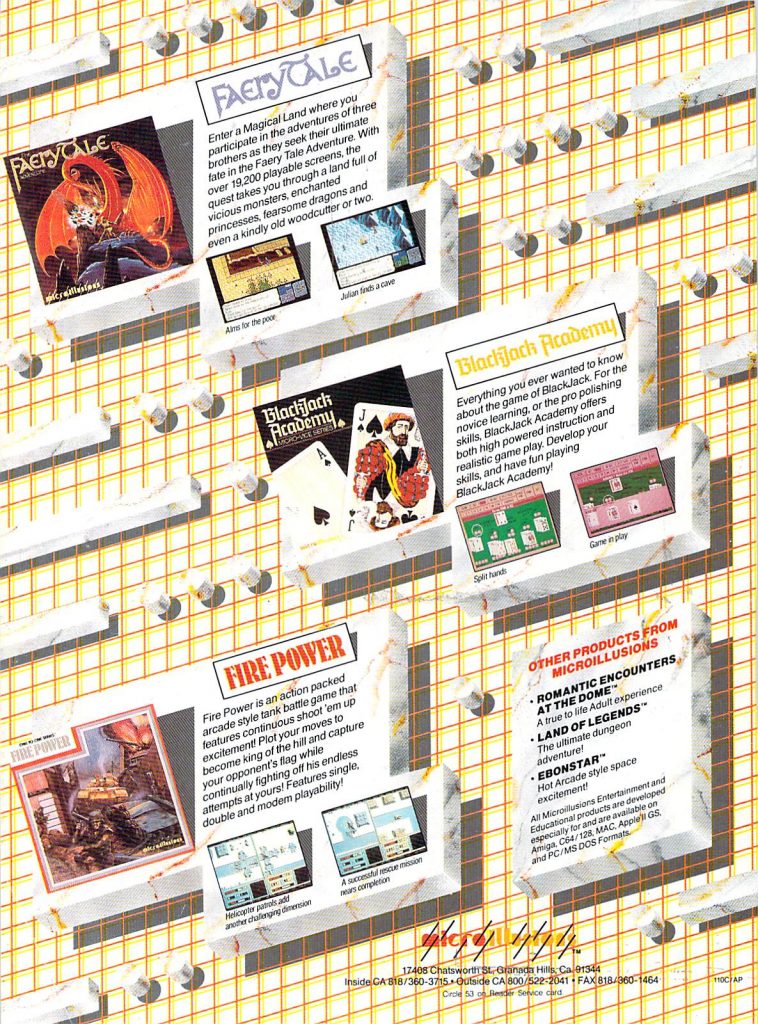
    • News and New Products – New games including Card Sharks, The Train: Escape to Normandy, Power at Sea, The Hunt for Red October, BattleDroids, The Rubicon Alliance, Global Commander, The Games: Winter Edition, Death Sword, 4×4 Offroad Racing, Impossible Mission II, Sporting News Baseball, L.A. Crackdown, Star Rank Boxing II, Land of Legends, Galactic Invasion, The Faery Tale Adventure, Black Jack Academy, Plasmatron, and more.
    • Mail Run – Readers write in about discontinued Commodore PC clones, GEOS clip art, Canadian word processors, save-with-replace bug, CP/M, the Okidata 180 printer, Gunship, and more.
    • Software Gallery – Reviews of Deja Vu, Instant Music, Apollo 18, Darkhorn, Halls of Montezuma, Cholo, Dark Lord, and Strategist.
    • Goto Programming – A guide to programming from Jim Butterfield.

      • A Basic Adventure – A guide to handling the data needed for programming your own adventure game.
    • The Assembly Line – A guide to assemblers on the Commodore 64/128.
    • Graphix to the Max – A type-in program for converting 40-column graphical displays to 80-column on the Commodore 128.
    • Drip-Drop – A type-in game for the Commodore 64 in which you must use buckets to catch raindrops.
    • Moving Messages – A type-in program for the Commodore 64 that lets you scroll large messages across the screen.
    • Tick-Tock 128 – A type-in program for the Commodore 128 that displays a 12-hour analog clock.
    • geoWatch – The new geoSpell plus tips from readers including tips for installing geoWrite, creating more space on workdisks, removing unwanted files, solving disk errors, converting files to Doodle!, and more.
    • Telecomputing Workshop – A comparison of Q-Link and GEnie prices.
    • Commodore Clinic – Questions answered about GEOS 128, using the 4040 disk drive with a Commodore 64, resetting the Commodore 64 programmatically, slowing down screen output, and more.
    • Mega-Magic – A short program to delete and save a new version of a file with one command.

    …and more!


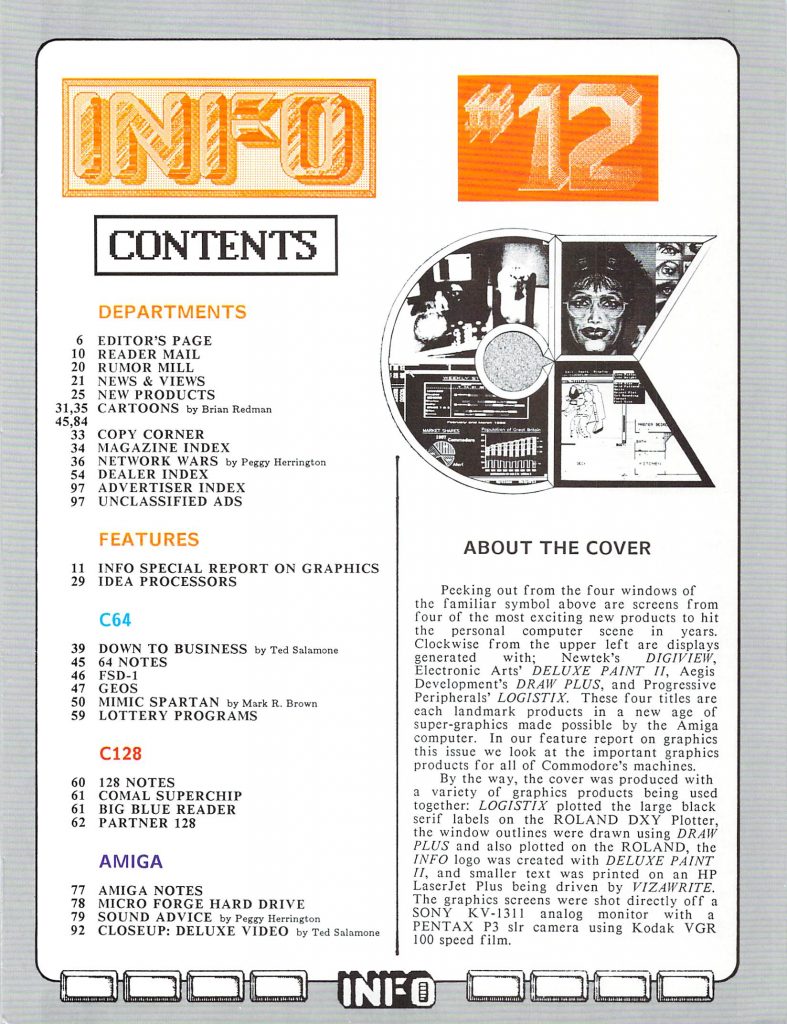
  • Info (November/December 1986)

    Info is a magazine that covered Commodore computers. At the end of 1986 that included the Commodore 64, Commodore 128, and Amiga. Info wasn’t as widely available as some other Commodore magazines though it was still fairly popular. It was also produced using Commodore computers (the Amiga at this time). The November/December 1986 issue includes:

    Departments

    • Editor’s Page – On upcoming changes to the magazine.
    • Reader Mail – Letters from readers about PC emulation for the Amiga, memory expansion for the Amiga, and more.
    • Rumor Mill – Rumors about new Ashton-Tate software for the Amiga, Microsoft Word ports, Lotus for the Amiga, two new Amiga models, and more.
    • News & Views – Commodore computer fair in New England, the new Apple IIgs, Ashton Tate removes copy protection from their software, Mindscape acquires Scarborough Systems, TPUG Magazine ceases publication, Supra acquires Cardco, Commodore has new vice president, Commodore posts first profit in 18 months, QuantumLink charges extra for e-mail, and much more.
    • New Products – A look at new product releases including The Epyx 500XJ joystick, Writer’s Workshop (C64/GEOS), Sampler-64 Commodore 64 sound sampler, World Geography (C64), LINCAD linear circuit analysis and design software for the C64, Term Paper Writer (C128), Amiga APL Interpreter, DisKwik (Amiga), Kwik Speak 1 (Amiga), Nancy spell checker for the Amiga, AmeriNet Ethernet Controller for the Amiga, Alegra 512K memory upgrade for the Amiga, and more.
    • Copy Corner – A look at memory snapshot programs which take a snaphot of a program exactly as it is in memory and saves it to disk to be reloaded later. Some programs include Isepic, Snapshot, Capture, and The Power Cartridge.
    • Network Wars – A look at modems for the Commodore 64 and Amiga, 300 baud vs. 1200 baud, Xmodem transfers, and more. Some specific modems looked at here include the Avatex 1200, Password 1200 from U.S. Robotics, CTS 2424ADS Datacomm, SmartTEAM 103/212A, and Novation 2400 Professional

    Features

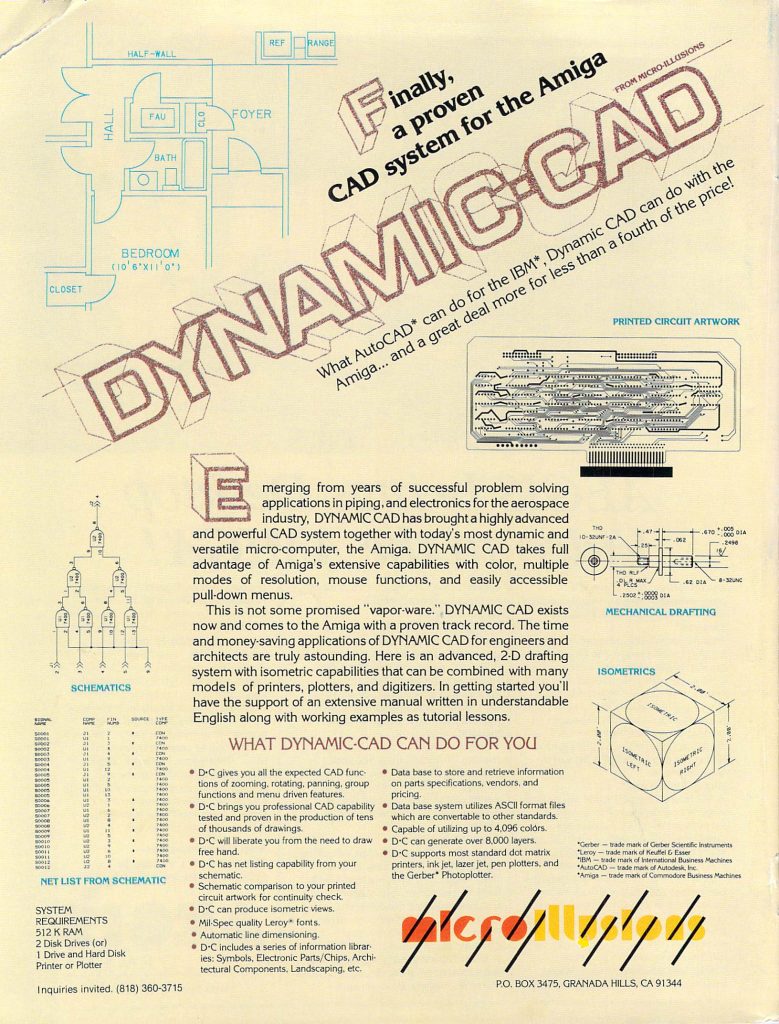
    • Info Special Report On Graphics – A look at some of the graphics software available on the C64 and Amiga including Flexidraw (C64), Doodle! (C64), Micro Illustrator (C64), Graphics Magician (C64), Picasso’s Revenge (C64), Deluxe Paint (Amiga), AEGIS Images (Amiga), Graphicraft (Amiga), Flexifont (C64), Icon Factory (C64), Graphics Integrator (C64), Graphic Conversion C64, ART PAK I (Amiga), Grabbit/Anytime (Amiga), Dpaint Art & Utility (Amiga), CAD-3D (C64), Perspectives II (C64), Aegis Draw and Aegis Draw Plus (Amiga), PCLO, Dynamic CAD (Amiga), Movie Maker (C64), Cyber Video (C64), Gary Kitchen’s Gamemaker (C64), Print Shop (C64), Print Master (C64), The Newsroom (C64), Aegis Animator (Amiga), Deluxe Video (Amiga), Impact! (Amiga), Deluxe Print (Amiga), Computereyes (C64), Digi-View (Amiga), and more.
    • Idea Processors – Outline processors for creating scripts, stories, etc. Some of the products looked at here include Flow (Amiga), BrainTrust 128 (C128), Out-Think (C128 CP/M), and Thoughtform (C64).

    C64

    • Down to Business – The second and last part in a series on word processors for the Amiga, Covered here are Timework’s Word Writer, Easy Script, Wordpro 64, Fleet System 2, Superscript, Pocket Writer 64, and Bank Street Writer.
    • 64 Notes – Using DOS Wedge commands from your BASIC programs, plus how to change your background, border, and text colors and scrolling text.
    • FSD-1 – A look at one of the better 1541 disk drive clones along with some warnings about using a non-1541 as your primary drive (mostly related to copy protection).
    • GEOS – A look at this graphical operating system for the Commodore 64.
    • MIMIC Spartan – The Apple II emulator for the Commodore 64 that basically included the hardware of the Apple II+.
    • Lottery Programs – Includes a type-in BASIC program for generating lottery numbers.

    C128

    • 128 Notes – How to control whether you are printing to the 40 Column or 80 column screen, improving the F2 preprogrammed DLOAD command, and creating music easily in BASIC on the C128.
    • Comal Superchip – A 16K ROM extension for the COMAL 2.0 cartridge that adds various improvements.
    • Big Blue Reader – This software allows you to read and translate MS-DOS disks on a Commodore 128 with 1571 disk drive.
    • Partner 128 – A cartridge that provides various pop-up utilities and should be compatible with most Commodore 128 software.

    Amiga

    • Amiga Notes – A trick to save memory, Amiga controllers, CLI shortcuts, bad 8520 ACIA chips, using keyboard shortcuts instead of a mouse, and more.
    • Micro Forge Hard Drive – A review of this $1580+ 20 megabyte external SCSI hard drive for the Amiga. This was one of the only early hard drives available for the Amiga.
    • Sound Advice – Creating and editing digital samples on the Amiga, including a look at some of the hardware and software available. Digitizers and associated software looked at here include MicroGraphics Digitizer, Micro Forge Stereo Sound Digitizer, and SoundScape Sound Sampler.
    • Closeup: Deluxe Video – A detailed look at this software for creating animation on the Amiga.

    …and more!