• Tag Archives NES
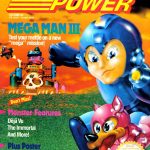
  • Nintendo Power (January 1991)

    Source: Nintendo Power – Issue Number 20 – January 1991

    While perhaps not exactly impartial, Nintendo Power was the go-to magazine for all things Nintendo. Early 1991 was really peak NES. The Super Famicom had already been released in Japan but it would be August before the Super NES would arrive in the U.S. Coverage was all NES and Game Boy except for a few previews. The January 1991 issue includes:

    Features

    • Mega Man III – A strategy guide for the latest Mega Man game.
    • The Immortal – A strategy guide for this isometric action/adventure game from Electronic Arts. I really wanted this game but when I got it, it did not work correctly with my TV for some reason (wavy picture) so it ended up being returned. I don’t think later reviews were very good so maybe I dodged a bullet.
    • Deja Vu – Strategy guide for this point and click murder mystery. You shouldn’t really use these guides unless you are completely stuck because they basically ruin the game. Especially this kind of game.
    • Gremlins 2 – Strategy guide for this overhead action/adventure game based on the movie of the same name.

    Video Updates

    • Now Playing – A brief look at recent releases including Conquest of the Crystal Palace, Jackie Chan’s Action Kung Fu, Silver Surfer, The Adventure or Rad Gravity, Werewolf and Arch Rivals.
    • Pak Watch – Previews of soon to be released games, including G.I. Joe, Metal Storm, Base Wars, Monopoly, Zombie Nation, Uninvited, Galaxy 5000, and Mini-Putt. Plus a look at the first Super Famicom games, Super Mario World, F-Zero, and Pilotwings.

    Game Boy

    • Dragon’s Lair – Dragon’s Lair turned into a platform game.
    • Mercenary Force – Medieval Japanese squad based combat on the Game Boy.
    • Burai Fighter Deluxe – A sci-fi shoot-em-up.
    • F-1 Race – A Pole Position like racing game featuring 4-player action using the Video Link.
    • Super Scrabble – The classic board game playable against another player via the Video Link.

    Player’s Forum

    • Player’s Pulse – Readers write in about Tetris and playing the Game Boy around the world.
    • NES Achievers – High scores and achievements in Adventures in the Magic Kingdom, Captain Skyhawk, Crystalis, Final Fantasy, The Mafat Conspiracy, Ninja Gaiden II, Pinbot, Rescue Rangers, Revenge of the Gator, Rock ‘N Ball, Rollerball, Snake’s Revenge, Solstice, Stealth ATF, Tetris, Tombs & Treasure, and Wall Street Kid.
    • Top 30 – At the top of the list of games this month are Super Mario Bros. 3, Final Fantasy and Crystalis.

    Tips from the Pros

    • Classified Information – Tips, tricks and cheats for Castlevania II, Heavy Shreddin’, Final Fantasy, Dungeon Magic, Dragon Spirit, Alien Asylum, Image Fight, Skate or Die 2, Swords and Serpents, and Thunderbirds.
    • Howard & Nester – A monthly comic from Nintendo Power. Not sure why this is in the ‘Tips From the Pros’ section but that’s where they have it.
    • Counselors’ Corner – Questions answered about Destiny of an Emperor, Dungeon Magic, Crystalis, and Swords and Serpents.

    Special Reports

    • Today’s Technology – A look at some of the upgrade hardware for the NES that was included in game paks (cartridges). These include extra RAM, MMCs (Memory Management Controllers) that added various capabilities. MMC1 = used in many games, allowed scrolling. MMC2 = used in Punch-Out!!. MMC3 = added the ability for split screen scrolling and scrolling at an ange and is used in Super Mario Bros. 3 and Play Action Football. MMC5 = improved battery backup, better color definition, partial screen scrolling, increased max cart size; used in Castlevania III among others.
    • The Miracle Piano Teaching System – A look at a keyboard and cartridge combo for the NES that teaches you how to play the piano.

    The Info Zone

    • Player’s Poll – Answer a few questions for a chance to win various prizes.
    • Celebrity Profile – A feature on New Kids on the Block and their gaming habits.
    • Next Issue – Coverage of Teenage Mutant Ninja Turtles II: The Arcade Game, Startropics, Gremlins II on the Game Boy, and more.

    …and more!


  • Gauntlet (NES)

    Gauntlet is as much a major milestone in the arcades as games like Pac-Man and Space Invaders. It was original, had outstanding graphics and sound, and had the relative novelty of four-player cooperative play. It also spawned endless sequels and home conversions for years to come. It is considered to be the first multiplayer dungeon crawl arcade game.

    Despite its apparent originality, like all great games, it is built on the success of others. Gauntlet was released in 1985 but bears a resemblance to an Atari 8-bit game from 1983 called Dandy and it’s no wonder as one of the developers of Dandy also worked on Gauntlet. Another 1983 game called Time Bandit, originally for the TRS-80 also shares some resemblance. In fact, Gauntlet could even be though of as an updated real-time version of Rogue which was released all the way back in 1980. Influences not withstanding, Gauntlet improved upon all of these in a variety of way, making it what I would consider the first mainstream game of its type.

    Gauntlet was originally released by Atari as an arcade game in 1985. Numerous home ports would follow. The first one I remember playing was for the Commodore 64. However, the images here are from the NES version so that one is going to be my focus here. However, regardless of the version, game-play was pretty much identical in every version. From an overhead, scrolling viewpoint you had to find your way through a maze from the entrance to an exit to the next level. Along the way you had to face enemies like ghosts, demons, thieves, and more, including the dreaded Death. Most enemies are spawned from generators scattered about the level which can also be destroyed. Other items like food to restore health, treasure to increase your score and potions to destroy everything on the screen can also be found.

    Tengen, a label of Atari Games, published Gauntlet on the NES in 1987. There were two versions, one license and one unlicensed though for the most part they were identical. While game-play is more or less the same as the arcade version, it isn’t identical. Gauntlet on the NES actually combines elements from Gauntlet and Gauntlet II. This means that levels aren’t necessarily the same and there are some other differences like being able to increase your max HP by collecting treasure, additional items to collect and more subtle changes. However, the graphics and game play match the arcade game pretty well and it is a solid version of the game. Perhaps the biggest drawback to this version (and most home versions) was the fact that only two players could play at once instead of four.

    While there have been many sequels and updates to Gauntlet over the years, to the best of my knowledge, the only way to play the NES version of Gauntlet is to acquire an original cartridge or use emulation. The arcade version of Gauntlet can be found on Midway Arcade Treasures which was available for a variety of systems. Gauntlet was followed up by Gauntlet II in the arcades and at home as well as additional sequels on home platforms including Gauntlet: The Third Encounter, Gauntlet III: The Final Quest, and Gauntlet IV (I guess III wasn’t so final after all). The arcade series was revived in 1998 with Gauntlet Legends (which I played a lot of on the Dreamcast). Gauntlet Legends was the last Gauntlet game to be produced by Atari though there were a couple of sequels.

    While the newer Gauntlet Legends games are indeed fun, there’s something about the original that keeps you coming back for more. I definitely recommend that gamers who have never played the original Gauntlet to give it a try. You can pretty much pick your favorite platform. The original arcade is a good choice of course, but the NES version and the Commodore 64 version (my personal favorite) are excellent as well. Other than emulation, the easiest way to get a hold of the original Gauntlet is to track down a copy of Midway Arcade Treasures.


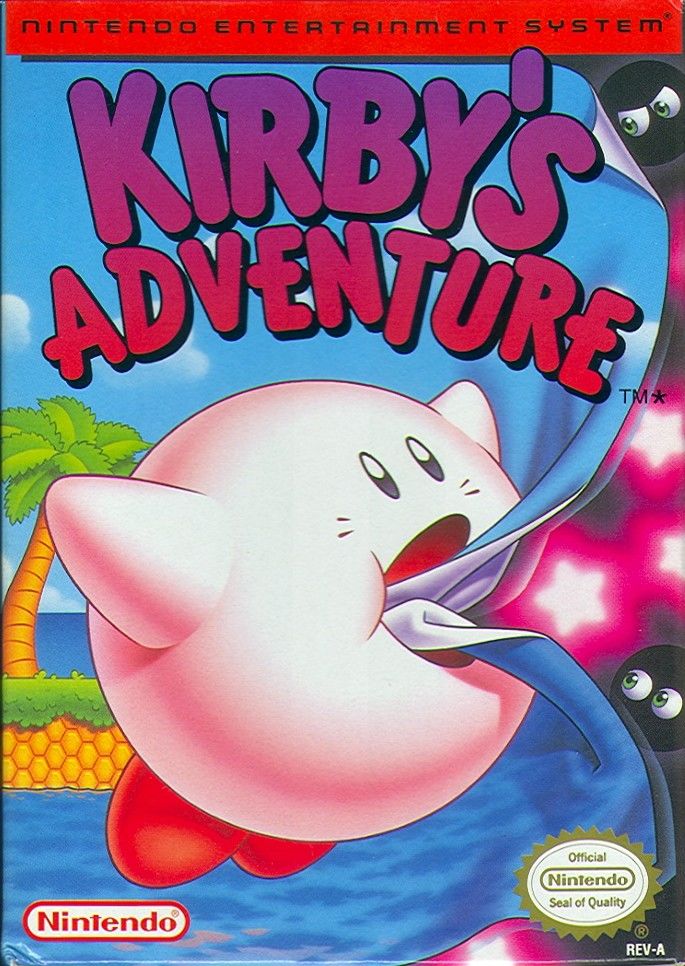
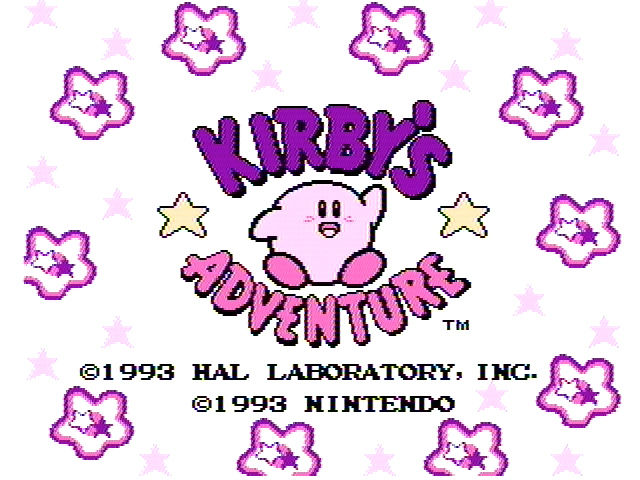
  • Kirby’s Adventure (NES, 1993)

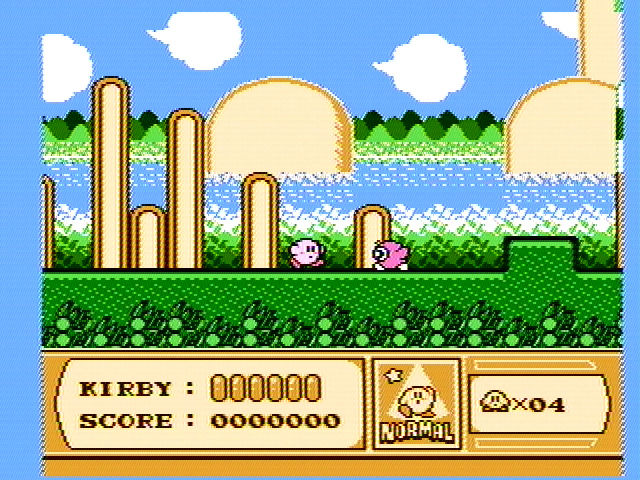
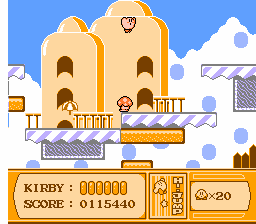
    Kirby’s Adventure was the second game to feature Kirby and the first on the NES. It was released late in the life of the NES in 1993. However, this meant that developers had learned how to get the most out of the system by this time so graphics and sound were quite good, at least for the NES. The previous Kirby game, Kirby’s Dream Land, was released the year before in 1992 on the Game Boy.

    Kirby’s Adventure was in many respects a pretty typical platform game. Though perhaps a mild criticism, Kirby’s Dream Land for the Game Boy had been criticized for being a bit too simple. One of the things done to address that criticism with Kirby’s Adventure was to give Kirby the ability to steal enemies’ powers. By swallowing an enemy, Kirby could take the abilities of that enemy. In addition to copying an enemy’s abilities, Kirby can run, jump, slide, kick and fly. But Kirby’s main attack capability is achieved by inhaling enemies or other objects and spitting them out as star shaped bullets.

    Despite the differing platforms, Kirby’s Adventure is a direct sequel to Kirby’s Dream Land. Originally, it had been intended to be a direct port but the developers decided a more advanced game would be better for the NES so it became a sequel. The game’s plot revolves around an evil entity named Nightmare who has corrupted the Fountain of Dreams disrupting the sleep of the residents of Dream Land. You must find the various pieces of the Star Rod which powers the fountain in order to defeat Nightmare.

    Kirby’s Adventure was one of the best selling games the year it was released and achieved virtually unanimous positive reviews. If you like platform games at all, then this is definitely one worth playing. As it came out quite late in the life of the NES, a lot of people probably missed out on it…those that had moved on to 16-bit systems anyway. An enhanced remake was published on the Game Boy Advance as Kirby: Nightmare in Dream Lan in 2002. A port of Kirby’s Adventure was also released as a downloadable game via the Nintendo 3DS eShop in 2011. It was also released for the Wii Virtual Console in 2007 and the Wii U Virtual Console in 2013 with a separate release of the GBA version for the Wii U Virtual Console in 2014. It was also released as part of Kirby’s Dream Collection in 2012 for the Wii. It was also one of the games included as part of the NES Classic Edition in 2016. Finally, it was added to the library of NES games available via the Nintendo Switch Online Service in 2019. Needless to say there have been plenty of ways to enjoy this game and any platform or Nintendo game fan should definitely give it a try.