TURBOGRAFX-16 AD
http://darth-azrael.tumblr.com/post/162676246064/videogameads-turbografx-16-ad-ask-me
When you think back to the 16-bit wars it’s easy to think of it as being Sega vs. Nintendo because by the end, that’s exactly what it was. However, for the first couple of years, Nintendo didn’t even step onto the field of battle. Instead, the early days of the war were a slugfest between the TurboGrafx-16 and the Sega Genesis.
In retrospect, it was easy to predict that Sega would ultimately win that round. They already had the name recognition, produced their own arcade games, and the Genesis hardware had a better claim to being truly 16-bit. But things were not quite that clear-cut at the time.
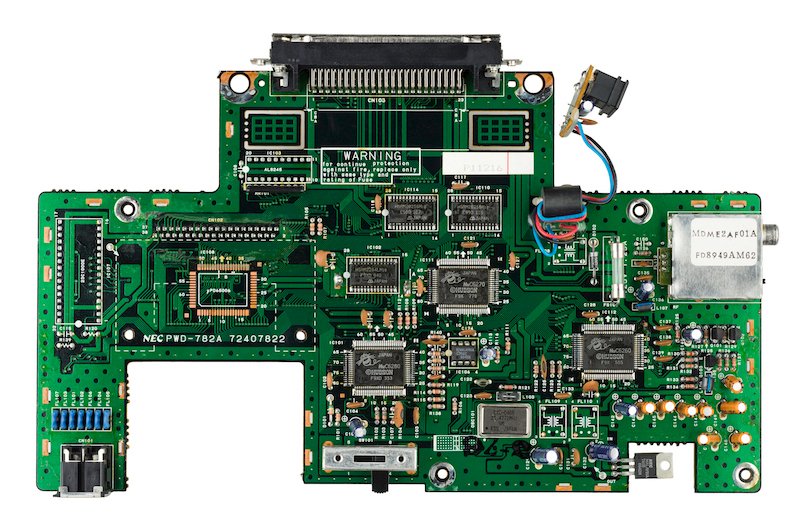
Despite the 8-bit CPU and due largely to the impressive graphics chip, the TurboGrafx-16 could display an impressive 482 colors (241 background, 241 sprite) out of 512 colors on screen at the same time. It could also deliver a maximum resolution of 565×242 (though most games used 256×239 or 512×224). The TG-16 could also display up to 64 sprites on-screen at the same time. The key hardware components of the TG16 were:
- CPU: HuC6280 (an improved version of the WDC 65C02 CPU running at up to 7.16 MHz)
- VDC: HUC6270 (16-bit graphics processor with 64KB of VRAM)
- RAM: 8KB (CD-ROM add-on contained an additional 64KB or 192KB with the Super System Card)
The Sega Genesis had a mediocre launch line-up consisting of Altered Beast, Ghouls n Ghosts, Alexx Kidd, Golden Axe and The Last Battle. These are by no means terrible games and were graphically impressive but there aren’t a huge number of genres represented and as most of these are arcade conversions, not a lot of depth either.
On the other hand, the TurboGrafx-16 launched with nine titles spanning several genres. Titles included R-Type, Keith Courage, China Warrior, The Legendary Axe, Power Golf, Dungeon Explorer, and the awesome Alien Crush among others. NEC also beat Sega to market with a CD-ROM add-on. The TurboGrafx-CD was introduced in August 1990 while the Sega CD wouldn’t show up for more than a year. In addition, a portable version of the TurboGrafx-16 (the Turbo Express) was brought to market a year after the TG-16 was introduced. Sega eventually did the same with the Sega Nomad but not until the days of the Genesis were nearly over. However, the initial success of the TurboGrafx-16 was short-lived.
There are a number of reasons the TurboGrafx-16 ultimately lost the war. First, while the TG-16 had a technically impressive 16-bit graphics processor, the CPU was an 8-bit CPU based off of the same 6502 technology that the NES and Commodore 64 (among others) was based off of (albeit enhanced quite a bit and running at a very fast (for a 6502) 7+ MHz). The Genesis on the other hand used the same CPU that the Amiga and Macintosh used – the Motorola 68000. While this wasn’t a huge disadvantage initially, it became more so as programmers grew better and better and extracting performance from the existing hardware. The 68000 based Genesis just had more headroom to expand into.
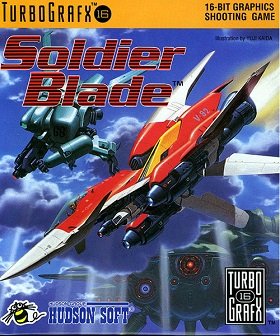
The next problem was poor marketing. I don’t think that the quality of their marketing was necessarily horrible. In fact, it reminded me a lot of Sega’s early marketing. It’s just that there wasn’t a lot of effort or money spent on the marketing so there wasn’t much of it. Also, the quality of the game packaging was pretty terrible compared to Nintendo and Sega. I appreciate the minimalism but it just didn’t stick out.
The biggest reason the TurboGrafx-16 ultimately lost the 16-bit wars was due to software support (or the lack thereof). While the launch titles were impressive, every year seemed to bring fewer and fewer A+ quality titles. Part of this was due to the poor choices of NEC in terms of what games to bring to the U.S. from Japan (see my previous post on J.J. & Jeff). Part of it was due to Nintendo’s strict licensing terms. Third party developers were not allowed to develop a game for the NES (and later SNES) and then release it on another system. The end result of this was that all the best third party games went to Nintendo systems. Also, NEC didn’t have the first party expertise that Sega did. Sega was able to develop enough quality first party games to produce the hardware sales necessary to attract third party developers despite Nintendo’s licensing rules. NEC didn’t do so well at that. I think NEC/Hudson Soft could have still overcome that to a large degree by bringing better titles to the U.S. from Japan, particularly CD-based games. The TurboGrafx-16 (or PC Engine as it was called there) was hugely successful in Japan, even the number one system for a time, based on the strength of the software they released there. It’s just too bad they didn’t bring more of it here.