• Tag Archives Socialism
  • Scandinavia Is No Socialist Valhalla

    Scandinavia Is No Socialist Valhalla

    Scandinavia occupies a special place in the minds of socialists around the world. The Guardian journalist Polly Toynbee once described Sweden as “the most successful society the world has ever known.”

    Over in America, all manner of people, from presidential candidates to Nobel-prize winning economists, have argued that policymakers should take Scandinavia as a model for reducing inequality and promoting more balanced growth.

    But is it really the socialist Valhalla it’s feted to be?

    Addressing Harvard University last year, Danish PM Lars Løkke Rasmussen tried to set the record straight. “I know that some people associate the Nordic model with some sort of socialism,” he said. “I would like to make one thing clear. Denmark is far from a socialist planned economy. Denmark is a market economy.”

    Indeed, viewing Scandinavian countries as socialist – or even left-wing – overlooks an essential truth about how their economies are organized. While these nations do have high taxes and generous welfare, in many respects, their markets are unusually free, adopting exactly the kind of policies that the British Left, with its rigid adherence to central planning and intervention, spends its time fighting against.

    Scandinavian Government vs. British Government

    Last week, the Labour Party pledged a minimum wage of £10 that would apply to all workers, including those aged 16-18. This policy would, if implemented, carry hugely perverse side-effects – with young and unskilled workers all but priced out of the job market.

    In contrast, the very concept of central government setting a “one-size fits all” policy to cover all jobs and sectors is utterly alien to the Scandinavian economies. Neither Sweden, Norway, nor Denmark actually has a minimum wage. Instead, wages are decided by mutual agreement between unions and employers, which usually vary according to the industry or occupation in question. In this respect, Scandinavian labor markets are far more flexible and decentralized than Britain’s.

    Corporate tax rates in Scandinavia compare favorably with those of overtly capitalist countries. Sweden and Denmark’s are among the lowest in the EU 15, while Finland’s, at 20 percent, is on a par with Britain. Norway has the highest rate of the five countries, but, at 27 percent, is still significantly lower than America’s (nearly 40 percent).

    While British reverence for the NHS has reached an almost religious fervor – and made discussions of outsourcing or adopting any kind of private provision of healthcare politically toxic – the Swedish have no such qualms.

    In a recent count, about 20 percent of public hospital care and about 30 percent of public primary care was provided by private companies – compared with around six percent in Britain.

    Meanwhile, Sweden’s education system – inspired by the ideas of that well-known socialist thinker Milton Friedman – allows parents to top-up the cost of private schooling with government-funded vouchers, and has led to a surge of choice and competition in schools.

    What about Norway?

    Norway, another nation often held up as an example of a “better way” by the British Left, is also something of a red herring.

    It is hard to exaggerate the importance of Norway’s vast oil reserves to its economic success; these have allowed it to build up the largest sovereign wealth fund in the world (predicted to reach $1 trillion by 2020). This gargantuan fund holds around 1 percent of the world’s shares, and owns more than 2 percent of all listed companies in Europe, as well as a vast property portfolio.

    Thus is Norwegian “socialism,” ironically, funded by investment in capitalist projects around the world. The historically sound investments made by the fund are a large part of the reason why Norway has proven so resilient in the face of fluctuating oil prices in recent years. Last year, for the first time ever, Norway’s government took more money from the fund than the fund itself derives from oil revenues, due to the worldwide slump in the commodity’s price. It is a crucial buffer that allows the nation to maintain its high spending and generous welfare programs.

    Conversely, Scandinavia’s prosperity has only ever been threatened when its nations have embraced genuinely socialist policies.

    How Did Sweden Get Here?

    In the 1970s, the size of the Swedish state began to expand in earnest under successive socialist governments. Punitive taxation, including effective marginal rates that topped 100 percent in some cases, prompted a mass exodus of wealthy citizens and entrepreneurs, including, famously, the filmmaker Ingmar Bergman and IKEA founder Ingvar Kamprad.

    By 1993, when public spending had reached 67 percent of GDP, Sweden had dropped from being the 4th richest nation in the world in the 1970s, to the 14th. Both Swedish and Danish citizens have since begun to reject “tax and spend” at the ballot box and recent years have seen a growth in support for center-right parties, promising fiscal restraint.

    It is easy to see why Scandinavia is so often mythologized by adherents of socialism. Its citizens enjoy some of the best universal healthcare and education in the world, which receives high levels of government funding and remains (largely) free at the point of use.

    But don’t be fooled by the high tax rates. The success of the Nordic Model hinges on its embrace of free-market capitalism, competition and defense of private property – a far cry from the centralized planning system espoused by the socialist Left.

    Reprinted from CapX.


    Madeline Grant

    Madeline Grant is digital officer at the Institute of Economic Affairs.

    This article was originally published on FEE.org. Read the original article.


  • The Original Jurassic Park and the Hubris of Central Planning 

    The Original Jurassic Park and the Hubris of Central Planning

    Michael Crichton’s techno-thriller Jurassic Park teaches us that no matter how advanced technology becomes, we will never be able to completely control nature.

    At first, it seemed like a wonderful dream: a park where once-extinct prehistoric beasts would roam as astonished visitors watched in awe. This at least was the vision of the park’s owner, the starry-eyed John Hammond. When I read the novel I could not help but see similarities between Hammond’s world-view and that of socialist “central planners.” Like the socialist romantics of the early 20th century, Hammond believed he could mold the world according to his will. And, as with those quixotic collectivists, idealism blinded Hammond to the reality that the earth and its inhabitants are harder to control than he imagined.

    Planned Chaos

    Throughout the novel, John Hammond brushes off criticisms of his beloved park. When it’s pointed out to him that dinosaur behavior has never been observed and is thus unpredictable, he naively replies that running Jurassic Park will be as easy as running a zoo.

    To this, Hammond’s interlocutor, the mathematician Ian Malcolm can only laugh. From the beginning, Malcolm believes that Jurassic Park is doomed to failure. As a proponent of chaos theory, he warns that Hammond could never account for all of the variables involved and the park would soon fall into utter disorder. “You’re going to have to shut the thing down,” he tells the incredulous Hammond.

    Interestingly, Ludwig von Mises made essentially the same argument against socialism in the 1920’s and 30’s.  In his essay “Economic Calculation in the Socialist Commonwealth,” Mises demonstrated that even the most diligent central planners would not be able to develop anything like an ordered society. He wrote, “Every step that takes us away from private ownership of the means of production…also takes us away from rational economics.” A society that abolished private property would thereby abolish the means for economic calculation. A government charged with the control of the entire economic system would lack any non-arbitrary way to decide what to produce, who is to produce it, and who is to consume it.

    Like the socialists of Mises’ day, Hammond and his colleagues at InGen thought they could create their own special order amidst a complex system. They believed they had foreseen every possible difficulty. But no amount of precautions could prevent the inevitable. They simply could not control the uncontrollable.

    Lessons Learned

    Yet even as the park is collapsing and people are dying, Hammond refuses to see his failure. Like the Soviet Communists looking at the death and despair around them, Hammond’s only defense is: “Nobody ever wanted this.” As with every central planner, he thinks his good intentions absolve him.

    Only Malcolm understands the truth of the situation. In a very Mises-esque fashion, he criticizes the whole Jurassic Park project as an arrogant attempt to master nature: “You decide you’ll control nature, and from that moment on you’re in deep trouble, because you can’t do it. Yet you have made systems which require you to do it.”

    In the same way, the socialists of the 20th century created systems which required them to control the lives of millions of people. To use Adam Smith’s astute analogy, they thought they could “arrange the different members of a great society with as much ease as the hand arranges the different pieces upon a chessboard.” It was by conceiving of human beings as chess pieces, or as cogs in a mechanical system, that the socialists went astray. Much like Hammond who thought he could control “his” dinosaurs as though they were robots, the central planners of old felt they could mold human society according to their wills. And as with Hammond’s theme park, the ultimate result was chaos, destruction, and death.


    Tyler Curtis

    Tyler Curtis is working toward attaining a B.S. in Economics at the Missouri University of Science and Technology.

    This article was originally published on FEE.org. Read the original article.
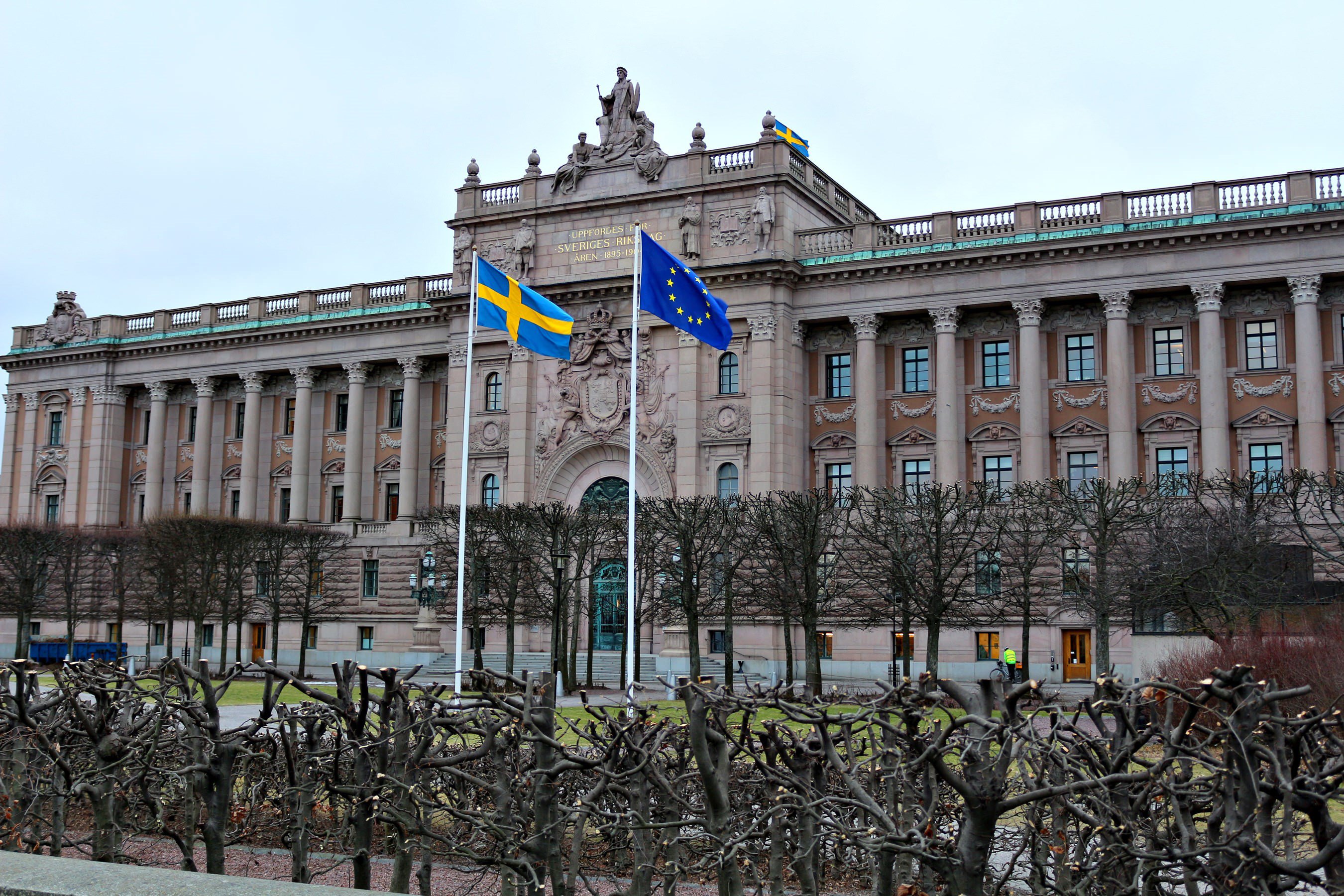

  • Nordic Socialism Isn’t the Answer for America

    The new American Dream is to be found in Denmark, at least according to the American left. As the support for free markets is falling, many Americans turn to the vision of introducing democratic socialism, inspired by the Nordic countries. It was the quest of introducing a Nordic-style welfare model that propelled Bernie Sanders, an unlikely candidate, to compete with the much more well-funded and connected candidate Hillary Clinton for months in the Democrat primary. However, the aim of introducing a Nordic-style welfare model is also shared by Clinton, who will run against Trump in the coming presidential race. Ezra Klein, editor of the liberal news website Vox, has explained, “Clinton and Sanders both want to make America look a lot more like Denmark – they both want to pass generous parental leave policies, let the government bargain down drug prices, and strengthen the social safety net.”

    Out with the Old

    Turning towards democratic socialism is a major course change in American politics. For a long time, Americans have favored small governments and free markets over a generous welfare state. However, opinions are changing. A recent Harvard University study shows that a significant share of the American youth have lost faith in the free market system. Merely 38 percent of Americans in the age group 18-34 support capitalism. This is only slightly higher than the 33 percent who support socialism. As a contrast, amongst the middle age generation (50-64 years), fully 52 percent are in favor of capitalism while only 15 percent prefer socialism. Amongst those over 65, as few as 7 percent support socialism, while 60 percent believe in capitalism.

    The same poll showed that Bernie Sanders, the self-proclaimed socialist, was by far the most favorable candidate among young Americans. A majority of 54 percent had a favorable view of Sanders, compared to 37 percent for Hillary Clinton and as few as 17 percent for Donald Trump.

    Bernie Sanders, who joined the Democratic Party in 2015 after having been the longest-serving independent in US congressional history, used to be an old-fashioned socialist. His recent popularity owes to a clever shift in rhetoric, wherein Sanders explains that he doesn’t believe in socialism in general, but rather Nordic-style democratic socialism in particular.

    Tried, and Failed

    These days, it is difficult to generate enthusiasm about pure socialism. The system has failed, leading to human misery on a wide scale in every country in which it has been introduced. The Soviet Union, Cuba, Venezuela, and North Korea are hardly positive role models. China, the last major socialist country, has in many ways transitioned to a capitalist economy. A less radical idea that is gaining ground is democratic socialism.

    Democratic socialism is becoming increasingly popular amongst the Left in the United States. An important reason is that positive role models exist. In fact, a number of countries with social democratic policies – namely, the Nordic nations – have seemingly become everything that the Left would like America to be: prosperous yet equal and with good social outcomes. Bernie Sanders himself has explained, “I think we should look to countries like Denmark, like Sweden and Norway and learn from what they have accomplished for their working people.”

    Is it likely that the US will become more equal, prosperous, and better prepared to face social challenges if democratic socialism is introduced? Will the American Dream of social mobility be strengthened in such a system? Will Americans benefit from longer life spans and lower poverty if they adapt Nordic-style welfare models? According to Bernie Sanders, Democrat activists, left-of center intellectuals, and journalists, the answer seems to be yes. However, as I show in my new book Debunking Utopia – Exposing they myth of Nordic socialism, much of this is built upon misconceptions about Nordic societies:

    • Yes, it is true that Nordic societies combine high living standards with large welfare states. However, numerous studies show that the high tax systems significantly impede the living standard in these countries. Nordic countries compensate for large public sectors by having strong working ethics and adapting market-friendly reforms in other fields. The lesson for America certainly isn’t that higher taxes will create more prosperity, but rather the opposite.
    • Nordic societies did not become successful after introducing large welfare states. They were economically and socially uniquely successful already in the mid-20th century, when they combined low taxes and small welfare states with free-market systems.
    • The root of the high levels of equality, the economic prosperity, the high levels of trust and other advantageous social features of the Nordics seem to be a unique culture rather than unique policies. After all, Spain, Italy, and France also have large welfare states, built upon the ideals of democratic socialism. Why doesn’t the American left believe that US society would evolve to resemble Southern Europe after introducing a large welfare state?
    • Over time, the generous welfare states of Nordic nations have created massive welfare dependency, gradually eroding the strong norms of responsibility that undermine the region’s success. This, combined with the growth-reducing effects of a large state, explains why Nordic countries have gradually, over the past decades, moved towards less-generous welfare, market reforms, and tax cuts.
    • The combination of open borders, high taxes, and generous welfare systems has been anything but a success in Sweden. The open-border policies that Sweden experimented with in 2015 lead to a massive influx of new arrivals, who are finding it very difficult to integrate in the country. The result is massive social tension and increasing poverty. Countries such as the US, Canada, Australia, New Zealand, and even the UK are much better at integrating the foreign-born in their labor markets.

    Lastly, while the idea of Nordic-style democratic socialism is all the rage among the left in the US and other countries, in the Nordic countries themselves social democracy has never been weaker than today. In Denmark, the social democrats themselves have introduced massive market reforms and called for a much slimmer welfare state. In Sweden, the only one of the Nordic countries to currently be led by a center-left government, the Social Democrats are polling their lowest support in modern times.

    In a time when the American left – and, for that matter, much of the global left – are enthusiastically pushing for a Nordic-style democratic socialism, perhaps it is worth knowing more about the strengths and shortcomings of the system?

    Source: Nordic Socialism Isn’t the Answer for America | Foundation for Economic Education