• Tag Archives government
  • Everything You Need to Know about Government, in One Story

    Everything You Need to Know about Government, in One Story

    Every so often, I run across a chart, cartoon, or story that captures the essence of an issue. And when that happens, I make it part of my “everything you need to know” series.


    I don’t actually think those columns tell us everything we need to know, of course, but they do show something very important. At least I hope.

    And now, from our (normally) semi-rational northern neighbor, I have a new example.

    This story from Toronto truly is a powerful example of the difference between government action and private action.

    A Toronto man who spent $550 building a set of stairs in his community park says he has no regrets, despite the city’s insistence that he should have waited for a $65,000 city project to handle the problem. 
    Retired mechanic Adi Astl says he took it upon himself to build the stairs after several neighbours fell down the steep path to a community garden in Tom Riley Park, in Etobicoke, Ont. Astl says his neighbours chipped in on the project, which only ended up costing $550 – a far cry from the $65,000-$150,000 price tag the city had estimated for the job. …Astl says he hired a homeless person to help him and built the eight steps in a matter of hours. …Astl says members of his gardening group have been thanking him for taking care of the project, especially after one of them broke her wrist falling down the slope last year.

    There are actually two profound lessons to learn from this story.

    Since I’m a fiscal wonk, the part that grabbed my attention was the $550 cost of private action compared to $65,000 for government. Or maybe $150,000. Heck, probably more considering government cost overruns.

    Though we’re not actually talking about government action. God only knows how long it would have taken the bureaucracy to complete this task. So this is a story of inexpensive private action vs. costly government inaction.

    But there’s another part of this story that also caught my eye. The bureaucracy is responding with spite.

    The city is now threatening to tear down the stairs because they were not built to regulation standards…City bylaw officers have taped off the stairs while officials make a decision on what to do with it. …Mayor John Tory…says that still doesn’t justify allowing private citizens to bypass city bylaws to build public structures themselves. …“We just can’t have people decide to go out to Home Depot and build a staircase in a park because that’s what they would like to have.”

    But there is a silver lining. With infinite mercy, the government isn’t going to throw Mr. Astl in jail or make him pay a fine. At least not yet.

    Astl has not been charged with any sort of violation.

    Gee, how nice and thoughtful.

    One woman has drawn the appropriate conclusion from this episode.

    Area resident Dana Beamon told CTV Toronto she’s happy to have the stairs there, whether or not they are up to city standards. “We have far too much bureaucracy,” she said. “We don’t have enough self-initiative in our city, so I’m impressed.”

    Which is the lesson I think everybody should take away. Private initiative works much faster and much cheaper than government.

    P.S. Let’s also call this an example of super-federalism, or super-decentralization. Imagine how expensive it would have been for the national government in Ottawa to build the stairs? Or how long it would have taken? Probably millions of dollars and a couple of years.

    Now imagine how costly and time-consuming it would have been if the Ontario provincial government was in charge? Perhaps not as bad, but still very expensive and time-consuming.

    And we already know the cost (and inaction) of the city government. Reminds me of the $1 million bus stop in Arlington, VA.

    But when actual users of the park take responsibility (both in terms of action and money), the stairs were built quickly and efficiently.

    In other words, let’s have decentralization. But the most radical federalism is when private action replaces government.

    Reprinted from International Liberty

    Editors Note: Since this article was originally published, the local government tore down Astl’s $500 stairs, citing “safety standards,” and plans to replace it with a $10,000 set.


    Daniel J. Mitchell

    Daniel J. Mitchell is a senior fellow at the Cato Institute who specializes in fiscal policy, particularly tax reform, international tax competition, and the economic burden of government spending. He also serves on the editorial board of the Cayman Financial Review.

    This article was originally published on FEE.org. Read the original article.

  • Governments Don’t Give People Rights

    Governments Don’t Give People Rights

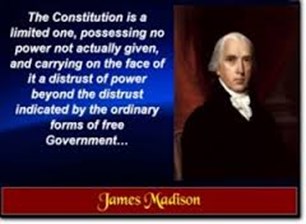
    Today’s Quotation of the Day is from pages 22-23 of Georgetown University law professor Randy Barnett’s must-read 2016 book, Our Republican Constitution:

    If one views We the People as a collection of individuals, a completely different constitutional picture emerges [from the one seen today by “Progressives”]. Because those in government are merely a small subset of the people who serve as their servants or agents, the “just powers” of these servants must be limited to the purpose for which they are delegated. That purpose is not to reflect the people’s will or desire – which in practice means the will or desires of the majority – but to secure the pre-existing rights of We the People, each and every one of us.

    Each of us has, throughout our lives, many agents. Some are formal (such as lawyers and realtors) while others are informal (such as the friend who agrees to run an errand for you). These people serve us, and we, in turn and in various ways, serve them – for example, we pay them money for their services.

    Importantly, the ‘power’ of each of these agents to act for us is confined to the purpose for which we hire that agent. I delegate to my real-estate agent the power to represent me in selling my home; I do not thereby delegate to her the power to sell my car, to decide how my children are to be educated, or what I may eat for lunch.

    Under the American constitutional system, elected officials are agents of the citizens of the politically defined regions from which these officials are elected. These political agents are no more the originating sources of their own powers and duties to represent the citizens who are their principals than, say, is your realtor the originating source of her power and duties to represent you, the person who hired her to sell your house.

    Rights pre-exist government. Therefore, even if – as most people believe – government is necessary to help to secure individuals’ rights, government does not create that which it itself is created to help to secure. Your real-estate agent might be necessary to sell your home, but this fact does not thereby make her the source of your home’s value or the owner of your home.

    And just as no amount of agreement by other homeowners and realtors to the proposition that your home now belongs by right to your neighborhood makes your home belong by right to your neighborhood, no amount of agreement by fellow citizens and political representatives that your property now belongs by right to the collective makes your property belong by right to the collective.

    When any such transfer of ownership occurs – wherever there is any such stripping away of rights from the individuals who possess them – what is really there is a brute exercise of raw power regardless of how gaudy is the philosophy that is used to portray this occurrence as something more profound.

    Reprinted from Cafe Hayek.


    Donald J. Boudreaux

    Donald Boudreaux is a senior fellow with the F.A. Hayek Program for Advanced Study in Philosophy, Politics, and Economics at the Mercatus Center at George Mason University, a Mercatus Center Board Member, a professor of economics and former economics-department chair at George Mason University, and a former FEE president.

    This article was originally published on FEE.org. Read the original article.


  • Government Does Not Belong in Our Shower

    Government Does Not Belong in Our Showers

    When I write about regulation, I usually focus on big-picture issues involving economic costs, living standards, and competitiveness.

    Those are very important concerns, but the average person in American probably gets more irked by rules that impact the quality of life.

    That’s a grim list, but it’s time to augment it.

    Showering with Disapproval

    Jeffrey Tucker of the Foundation for Economic Education explains that the government also has made showering a less pleasant experience. He starts by expressing envy about Brazilian showers.

    …was shocked with delight at the shower in Brazil. …step into the shower and you have a glorious capitalist experience. Hot water, really hot, pours down on you like a mighty and unending waterfall… At least the socialists in Brazil knew better than to destroy such an essential of civilized life.

    I know what he’s talking about.

    I’m in a hotel (not in Brazil), and my shower this morning was a tedious experience because the water flow was so anemic.

    Why would a hotel not want customers to have an enjoyable and quick shower?

    The answer is government.

    …here we’ve forgotten. We have long lived with regulated showers, plugged up with a stopper imposed by government controls imposed in 1992. There was no public announcement. It just happened gradually. After a few years, you couldn’t buy a decent shower head. They called it a flow restrictor and said it would increase efficiency. By efficiency, the government means “doesn’t work as well as it used to.” …You can see the evidence of the bureaucrat in your shower if you pull off the showerhead and look inside. It has all this complicated stuff inside, whereas it should just be an open hole, you know, so the water could get through. The flow stopper is mandated by the federal government.

    The problem isn’t just the water coming out of the showerhead. It’s the water coming into your home.

    It’s not just about the showerhead. The water pressure in our homes and apartments has been gradually getting worse for two decades, thanks to EPA mandates on state and local governments. This has meant that even with a good showerhead, the shower is not as good as it might be. It also means that less water is running through our pipes, causing lines to clog and homes to stink just slightly like the sewer. This problem is much more difficult to fix, especially because plumbers are forbidden by law from hacking your water pressure.

    Bureaucratic Design

    So why are politicians and bureaucrats imposing these rules?

    Ostensibly for purposes of conservation.

    …what about the need to conserve water? Well, the Department of the Interior says that domestic water use, which includes even the water you use on your lawn and flower beds, constitutes a mere 2% of the total, so this unrelenting misery spread by government regulations makes hardly a dent in the whole. In any case, what is the point of some vague sense of “conserving” when the whole purpose of modern appliances and indoor plumbing is to improve our lives and sanitation? (Free societies have a method for knowing how much of something to use or not use; it is called the signaling system of prices.)

    Jeffrey is right. If there really is a water shortage (as there sometimes is in parts of the country and world), then prices are the best way of encouraging conservation.

    Now let’s dig in the archives of the Wall Street Journal for a 2010 column on the showerhead issue.

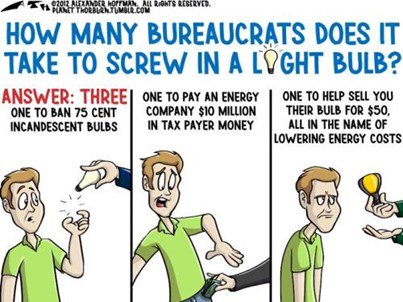
    Apparently bureaucrats are irked that builders and consumers used multiple showerheads to boost the quality of their daily showers.

    Regulators are going after some of the luxury shower fixtures that took off in the housing boom. Many have multiple nozzles, cost thousands of dollars and emit as many as 12 gallons of water a minute. In May, the DOE stunned the plumbing-products industry when it said it would adopt a strict definition of the term “showerhead”…

    A 1992 federal law says a showerhead can deliver no more than 2.5 gallons per minute at a flowing water pressure of 80 pounds per square inch. For years, the term “showerhead” in federal regulations was understood by many manufacturers to mean a device that directs water onto a bather. Each nozzle in a shower was considered separate and in compliance if it delivered no more than the 2.5-gallon maximum.

    But in May, the DOE said a “showerhead” may incorporate “one or more sprays, nozzles or openings.” Under the new interpretation, all nozzles would count as a single showerhead and be deemed noncompliant if, taken together, they exceed the 2.5 gallons-a-minute maximum.

    You’ve Got to Be Kidding

    And here’s something that’s both amusing and depressing.

    The regulations are so crazy that an entrepreneur didn’t think they were real.

    Altmans Products, a U.S. unit of Grupo Helvex of Mexico City, says it got a letter from the DOE in January and has stopped selling several popular models, including the Shower Rose, which delivers 12 gallons of water a minute. Pedro Mier, the firm’s vice president, says his customers “just like to feel they’re getting a lot of water.” Until getting the DOE letter, his firm didn’t know U.S. law limited showerhead water usage, Mr. Mier says. “At first, I thought it was a scam.”

    Unsurprisingly, California is “leading” the way. Here are some passages from an article in the L.A. Times from almost two years ago.

    The flow of water from showerheads and bathroom faucets in California will be sharply reduced under strict new limits approved Wednesday by the state Energy Commission. Current rules, established in 1994 at the federal level, allow a maximum flow of 2.5 gallons per minute from a shower head. Effective next July, the limit will fall to 2.0 gallons per minute and will be reduced again in July 2018, to 1.8 gallons, giving California the toughest standard of any U.S. state.

    Though “toughest standard” is the wrong way to describe what’s happening. It’s actually the “worst shower” of any state.

    P.S. I forget the quality of shower I experienced in South Korea, but I was very impressed (see postscript) by the toilet.

    Reprinted from International Liberty.


    Daniel J. Mitchell

    Daniel J. Mitchell is a senior fellow at the Cato Institute who specializes in fiscal policy, particularly tax reform, international tax competition, and the economic burden of government spending. He also serves on the editorial board of the Cayman Financial Review.

    This article was originally published on FEE.org. Read the original article.