• Tag Archives California
  • New State Regulations Force a California Charity for the Homeless to Close Shop


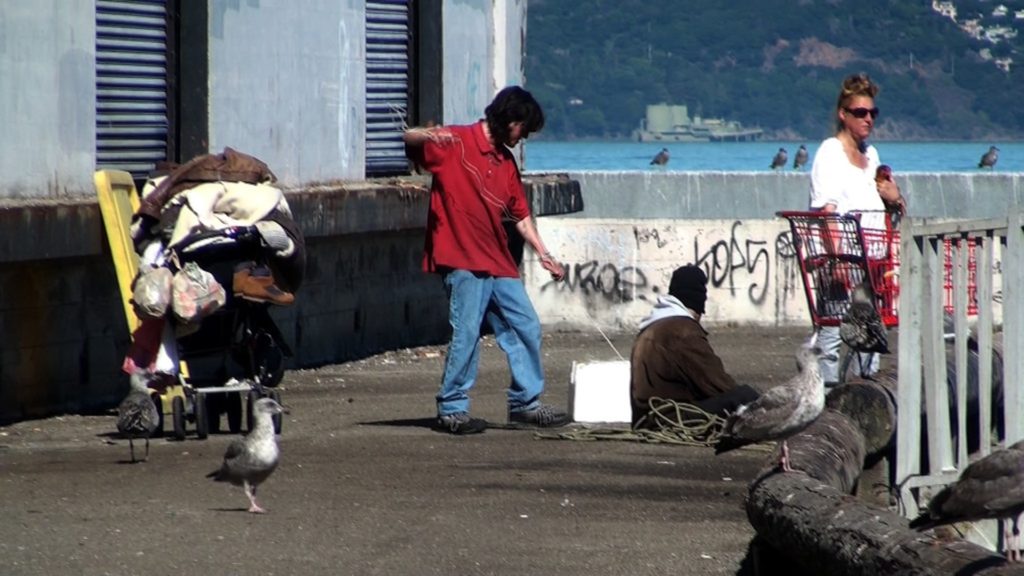
    For the past four years, Deliverance San Diego has been delivering hot meals to the city’s homeless population every Friday, averaging 200 donated meals on any given evening. Now, due to new guidelines passed by the State Legislature of California, the non-profit is ceasing operations and will dissolve by the end of the month.

    Through their existing model, hot meals were prepared in volunteer homes and distributed on the streets.

    “Volunteers from various churches gather at 17th and Commercial downtown to load four food wagons with chili, soup, cornbread, water, and other snacks,” the group’s web site explains. “We offer prayer and spiritual support, but one of the easiest things we do is get someone’s name and remember it.”

    Through the new requirements, set forth by the San Diego Department of Environmental Health, Deliverance would need to use licensed, state-approved kitchens, implement hand-washing stations, and meet a variety of other requirements.

    With a yearly budget of less than $7,000, according to the non-profit’s treasurer, Deliverance determined it can no longer sustain operations without extensive and expensive organizational changes. “We’re on a shoestring budget,” explains volunteer Gary Marttila, “so working out all those logistics became too big of an obstacle to overcome.”

    ABC 10 News in San Diego tells more of their story:

    As the San Diego Union-Tribune explains, several of the law’s backers have expressed surprise at the closure of Deliverance. According to Heather Buonomo, a program coordinator with the Department of Environmental Health, some sort of workaround may have been available or achievable. “We’re happy to work with them to find a solution that works for their charitable organization,” she said. According to Monique Limón, one of the bill’s authors, “The law would encourage more charities to provide food for the needy while also creating a level of oversight to ensure they follow proper health guidelines.”

    Yet it’s unclear what exactly would or could have been done if Deliverance had tried to negotiate with the state and find “a solution that works.” And the fact that it didn’t even try or think it could try says something about the pressure that these policies put on small and vulnerable charities and institutions who don’t feel they have political sway.

    Likewise, one can make any number of arguments about food safety, as Limón does, but it’s hard to imagine a scenario in which more burdens, more requirements, and tighter regulations will somehow “encourage more charities to provide food for the needy.”

    The reality is that the state’s dream of regulated soup and sandwiches is taking precedence over the bottom-up activity of neighbors who are passionate about loving their neighbors. Is that really an acceptable trade-off, particularly in an area that so desperately needs an intimate and personalized approach?

    “We’ve sought to provide comfort to those who are going through an incredibly difficult time,” says Deliverance’s press release on the closure. “In many situations, they are without a home due to no fault of their own. This action by the state creates significant barriers to those organizations like ours who simply want to show God’s love through a hot meal and some conversation.”

    Given the good—and thus far, safe—work of organizations like Deliverance, such regulations represent a prime example of the “unseen costs” of government action.

    In some cases, well-intended government policies lead to trade imbalances or economic surpluses or corporate cronyism or community inequities—all of which yield their own forms of social corrosion. But in cases such as these, we see the ill effects of these policies on charitable activity, resulting in real and tangible barriers to human love and relationship.

    Is it really worth it?

    This article was reprinted with permission from the Acton Institute.


    Joseph Sunde

    Joseph Sunde is an associate editor and writer for the Acton Institute. His work has appeared in venues such as The Federalist, First Things, Intellectual Takeout, The City, The Christian Post, The Stream, Patheos, LifeSiteNews, Charisma News, The Green Room, Juicy Ecumenism, Ethika Politika, Made to Flourish, and the Center for Faith and Work. Joseph resides in Minneapolis, Minnesota with his wife and four children.

    This article was originally published on FEE.org. Read the original article.


  • The Conceit Behind California’s Bad Idea to Tax Text Messages

    California routinely makes national headlines for its big government policies. This week is no different, as bureaucrats move to impose a texting tax on state residents in the name of providing mobile services to the poor.

    In a November proposal by the California Public Utilities Commission, Commissioner Carla J. Peterman laid out the “proposed decision” exploring the potential effectiveness of the tax.

    According to that 52-page report, California’s budget continues to increase even as tax revenues fall:

    “A review of California’s total reported intrastate telecommunications industry revenue, which is used to fund universal service, shows a steady decline in revenue from $16.527 Billion in 2011 to $11.296 Billion in 2017. At the same time, California Public Purpose Program budgets show a steady increase from $670 million in 2011 to $998 million in 2017…”

    California’s Public Purpose program, which adds a surcharge to consumers’ bills for utilities like gas in order to provide universal services to those who can’t afford them, would be tasked with facilitating the proposed text tax. And though the analysis refers to “industry revenue,” the funds would come from taxing individual wireless customers.

    Mercury News, a San Jose-based news outlet, noted that while it is still unclear how much consumers would be forced to pay, the fee would “likely would be billed as a flat surcharge per customer” as opposed to a per-text rate.

    While the Commission’s analysis acknowledges opposing arguments—including carrier companies’ assertions that the tax “would not preserve and advance universal service because it does not broaden the base of universal service consumers”—the commission ultimately advocated the additional tax burden.

    Parties supporting the collection of surcharges on text messaging revenue argue that it will help preserve and advance universal service by increasing the revenue base upon which Public Purpose Programs rely,” they write. “We agree.”

    Business advocacy groups like the Bay Area Council, the California Chamber of Commerce, and the Silicon Valley Leadership Group estimated that the proposed tax could generate $44.5 million in tax revenue per year. However, “they add that under the regulators’ proposal the charge could be applied retroactively for five years—which they call ‘an alarming precedent’—and could amount to a bill of more than $220 million for California consumers,” Mercury News reports.

    “It’s a dumb idea,” said Jim Wunderman, president and CEO of the Bay Area Council business advocacy group. “This is how conversations take place in this day and age, and it’s almost like saying there should be a tax on the conversations we have.”

    Wunderman also questionedthe necessity of additional taxes, referencing California’s current budget surplus:

    “While perhaps well-intentioned, the specific programs that the commissioners are hoping to fund with your tax dollars already has around $1 billion to spend. These programs are not in need of greater funding from texting or any other source, and even if they were, there is already an approved, transparent process at the commission to raise the necessary funds without the need to create new taxes.”

    Further, the proposed fees make even less sense considering the rise in popularity of internet-based messaging services like Facebook Messenger, Skype, WhatsApp, and Telegram, which would not be subject to the tax. In fact, the tax could very well push consumers further toward these internet-based apps to avoid extra costs.

    The November document is not legally binding, but it does assert the Commission’s alleged power to impose a texting tax.

    Whether or not the proposed tax becomes actual policy come January, the simple fact that it has been suggested at all illustrates the misguided yet pervasive belief in California that government omnipotence can create prosperity.

    It’s precisely this type of thinking that has caused the Golden State to squander one of the largest economies in the world, driving away businessesand individuals alike and inflating costs of living with the imposition of convoluted, interventionist policies. Because of restrictive zoning laws and bureaucratic regulations that make housing inaccessible to the middle class and the poor, for example, California continues to claim the highest rate of poverty in the country despite the billions of dollars it spends on welfare and social services.

    Despite the best—and heavy-handed—efforts of politicians and bureaucrats, the people they claim to represent continue to suffer under their policies. This should all come as no surprise. As economist Friedrich von Hayek observed:

    “To act on the belief that we possess the knowledge and the power which enable us to shape the processes of society entirely to our liking, knowledge which in fact we do not possess, is likely to make us do much harm.”

    Source: The Conceit Behind California’s Bad Idea to Tax Text Messages – Foundation for Economic Education


  • Don’t Blame California’s Poop Crisis on Capitalism

    I recently had the opportunity to visit San Francisco for the first time. Coastal towns tend to be a bit more interesting in terms of cuisine (seafood being one of the more varied palate options) and architecture (steep hill structures are ever a testament to human ingenuity), and San Francisco scores high in both categories. However, one area where it currently scores quite low is in the aroma zone. At first, I thought perhaps they had a very inefficient sewer system near the shoreline retail sector, but as we explored deeper toward the city center, it became clear something was amiss. I learned shortly thereafter that San Francisco has a poop crisis. To be blunt—people are literally crapping on the sidewalks. Not the tourists, mind you, but the local homeless population. The situation has come to a head (or to the head, to employ a nautical metaphor) primarily as a result of progressive conservatism primed with the power of centralized (governmental) authority.

    The outside leftist narrative, of course, is that this poop crisis is the inevitable result of unmitigated capitalism, which drives the eternal boogeyman of income inequality. This inequality fuels gentrification of the San Francisco housing market (no, actually property taxes are the prime driver of gentrification—if you owned your home absent property tax you would never need to sell due to rising prices). So as housing becomes ever more “unaffordable,” people are forced out of their homes and onto the street. This is, of course, complete nonsense.

    Prices only go up if supply is constrained while demand is rising. So in order to discover why supply is constrained, we turn our attention toward the “inside” leftists (that is, the progressive liberals who live there). It turns out that those who live there are, in fact, quite conservative (even if they don’t realize it). Any attempted new housing project must pass not only governmental hurdles but also the “local input” of current residents. These residents walk and talk like social progressives, but because one of their core tenets is that they do not want the flavor, character, or architecture of the area in which they live to change—that is, they want to conserve it in perpetuity. This by definition makes them conservatives in that arena. Their dual desire to not only keep San Francisco locked in an eternal snow globe style stasis but to also not erode the value of their homes drives them to engage in this very destructive economic protectionism: keeping newcomers out by making it virtually impossible (or more costly than necessary) to build keeps the value of their own homes artificially elevated while preserving the Norman Rockwell character of their town.

    To fully appreciate the extent of the damage they are causing and why, perhaps, more than anywhere else in the country the homeless problem is so acute, it should be noted that the median price of a modest single-family home now stands at $1.6 million. A family of four with a household income of $100k is considered at the poverty line and actually qualifies for assistance from HUD (let that sink in — taxpayers across the country are subsidizing the housing of people making a $100k/year).

    So what is the solution? Always the same and likewise always decried as “unrealistic”—remove all housing regulations and obstacles and let anyone build anything anywhere (works just fine in Houston, Texas, thank you very much). Your neighbor has no right to say what you can do with your property. Progressives (yes, I’m looking at you “townies” in Athens, Georgia) should stop blocking progress when it comes to housing and development.

    Source: Don’t Blame California’s Poop Crisis on Capitalism – Foundation for Economic Education