• Tag Archives PC
  • Maximum PC (April 1999)

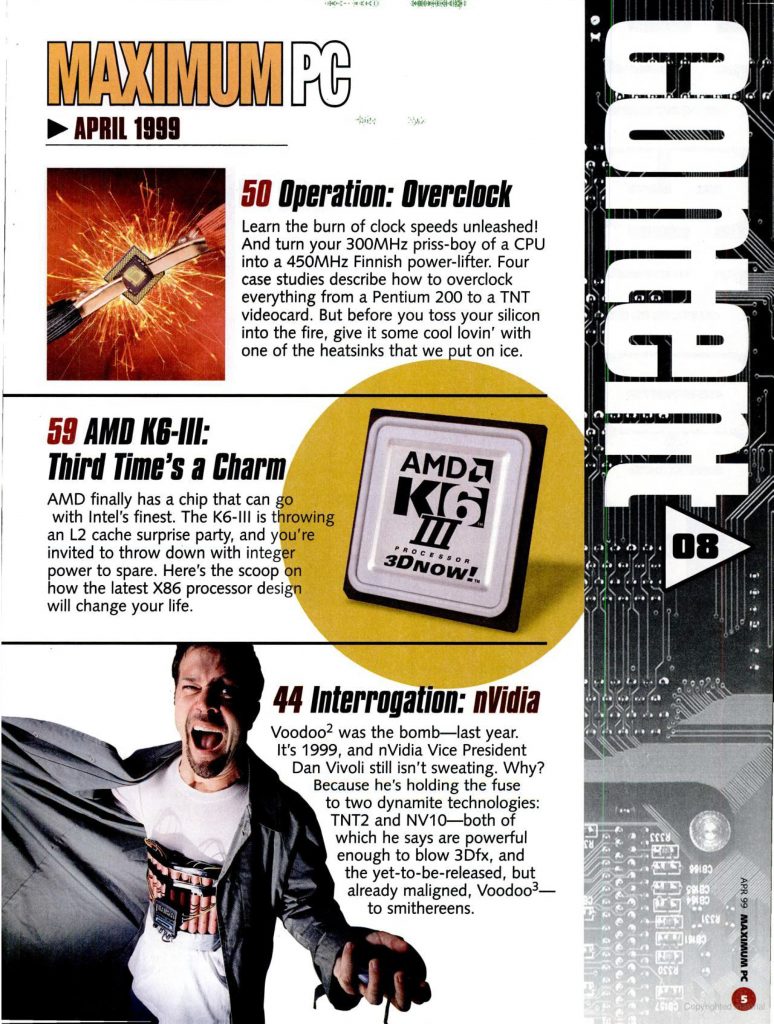
    Maximum PC was my favorite PC magazine. It was also one of the last major PC magazines to survive in print form. This was a magazine for PC enthusiasts with an emphasis on things like custom builds, overclocking, etc. The April 1999 issue includes:

    Features

    • Operation: Overclock – A guide to overclocking. In this article are attempts at overclocking the P200 MMX, Celeron 300A, Pentium II 266MHz, and TNT Videocard. Plus a look at various cooling solutions.
    • AMD K6-III: Third Time’s a Charm – The K6-III was faster than at least the early versions of the Pentium III at the same clock speed. The big advantage of the K6-III over the K6-2 was the built-in cache. Not only was it faster than motherboard cache but it also eliminated the memory restrictions of motherboard cache.
    • Interrogation: nVidia – A look at nVidia’s next gen video card, the TNT2.
    Voices

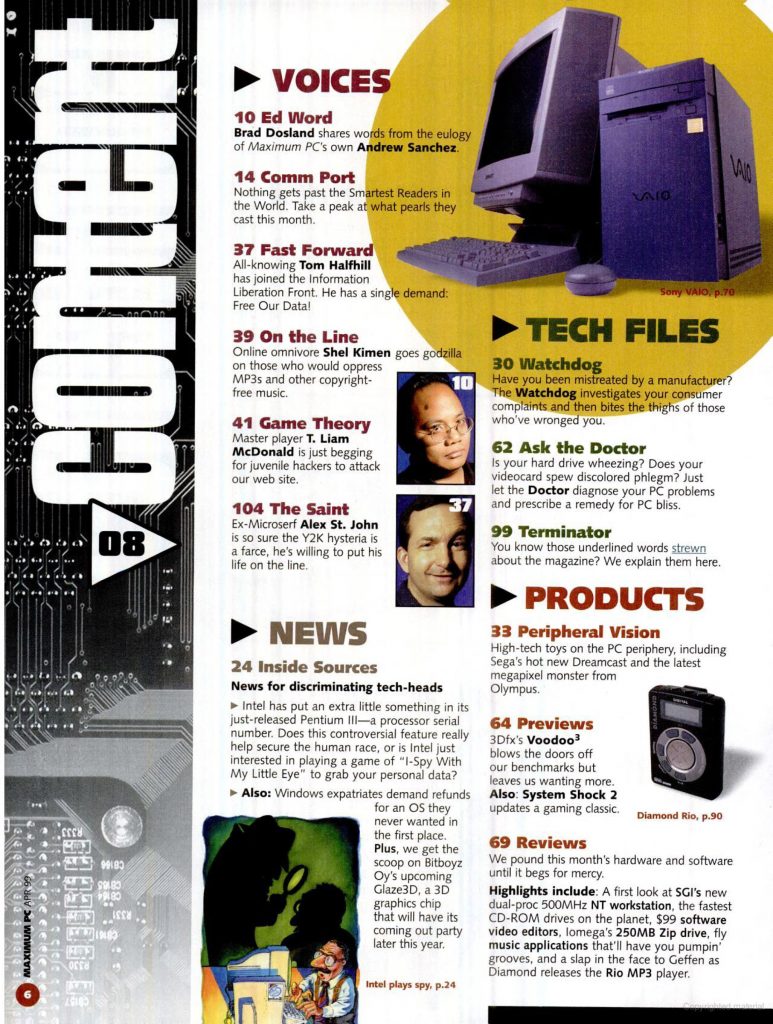
    • Ed Word – The death of one of Maximum PCs editors.
    • Comm Port – Letters from readers on improving modem performance, multiple magazine covers, Direct3D, identifying rebranded monitors, and more.
    • Fast Forward – This month’s future technology is eXtensible Markup Language (or XML).
    • On the Line – MP3s and the threat they represent to the music industry.
    • Game Theory – Piracy and its threat to gaming companies.
    • The Saint – The mass hysteria surrounding the Y2K bug.

    News

    • Inside Sources – Users who use an OS other than Windows seek refunds from PC vendors. It seems something in the Windows 98 license promises that.
    Tech Files

    • Watchdog – 3D Distribution goes out of business; EPS also goes out of business; Stargate 2000 owner pleads guilty to fraud; problems with a Micron laptop; and more.
    • Ask the Doctor – Questions answered about hard drive speeds and upgrading a Pentium II, reducing windows resource consumption, virtual memory, floppy drive alternatives, TCP/IP, overclocking, and more.
    • Terminator – A glossary of technical terms.

    Products

    • Peripheral Vision – The Voodoo3 from 3Dfx was a huge disappointment and the beginning of the end of the Voodoo line. 3Dfx would be purchase by nVidia.
    • Previews – Early looks at 3Dfx’s Voodoo 3 and System Shock 2.
    • Reviews – Reviews of the Sony VAIO PCV-E518DS (PC featuring a 500MHz Pentium III, 128MB SDRAM, Matrox G200 video card with 8MB SDRAM, 17GB hard drive), Compaq Presario 1900 (laptop featuring a 366MHz mobile Pentium II, 64MB SDRAM, NeoMagic MagicMedia 256AV AGB with 2.5MB SGRAM, 1024×768 display), SGI 320 NT Workstation (workstation from SGI featuring dual Pentium III 500MHz CPUS, Cobalt video, 512MB ECC SDRAM, 10GB hard drive), Shark Multimedia Leopard Pocket USB, Multi-Tech MultiModem USB, U.S. Robotics 56K Voice Faxmodem Pro, Kenwood 52x TrueX (a CD-ROM drive so fast it sometimes made CDs explode), AOpen CD-948E 48x, Plextor UltraPLEX Wide, Iomega Zip 250, Addonics Pocket SuperDisk, Diamond Rio PMP300 (before the iPod, the Diamond Rio line was probably the most popular MP3 players), Director 7, Partition Commander with System Commander, PartitionMagic 4.0 with BootMagic, Lumiere Video Studio, Video Studio 3.0, VideoWave II, Avid Cinema, Hip Hop eJay, Acid Music, Studio Pro, Music Maker Deluxe V2000, TurboTax Deluxe, European Air War, WWII Fighters, Combat Flight Simulator, Grim Fandango, and Star Wars: Rogue Squadron.

    …and more!


  • Edge (April 1999)

    Edge was a multi-format videogame magazine published in the U.K. However, Next Generation was basically a U.S. version of Edge and they shared much of the same content. The April 1999 issue of Edge includes:

    • The Next Generation PlayStation – A report on the PlayStation 2 which had just been shown publicly for the first time in Japan.
    • The Truth Is Out There – On game rarity and emulations gift of letting you play the rarest of games.
    • Crazy Taxi – A detailed look at this now classic arcade game from Sega. It must have been around this time that the last decent arcade games came out. It used to be that many games would have arcade versions before being ported to home systems but Crazy Taxi was near the end of that trend. I don’t think this ever happens anymore (though technically Sega still produces arcade machines).

    • Switched On – How the video game audience has change over the years going from being villainized by traditional media to starring in their own TV show.
    • Testscreen – Reviews of Power Stone, Silent Hill, Castlevania, Silver, Wild Metal Country, Lander, Warzone 2100, Civ: Call to Power, and Bloody Roar 2.
    • Prescreens – Previews of games still in progress including V-Rally 2, Grand Theft Auto: Mission Pack #1, London 1969, Undercover 2025AD, Conquest: Frontier Wars, Starlancer, Loose Cannon, Crazy Taxi, Rally Masters, Project Velocity, and Daikatana. Plus some very early previews of Gran Turismo 2, Blue Stinger, War: Final Assault, Hidden and Dangerous, Omega Boost, Dino Crisis, and Carrier.
    • An Audience With John Carmack – John Carmack of id Software talks about what’s next for 3D shooters. In this case, Quake III Arena and the technologies that games of the future might use.

    • News – Coverage of the PlayStation 2, Sega’s Naomi hardware, a PlayStation emulator for the Dreamcast, and more.
    • Develop – An interview CRI representatives about new game tech including MPEG Sofdec and ADX.
    • Arcadeview – Coverage of Tokyo’s AOU show featuring Sega’s Naomi arcade hardware and new games like Bust A Move, Jumping Groove, Pop’n Music 2, Dance Dance Revolution 2, Beat-Mania II DX, Silent Scope, Airline Pilots, Spikout, Blood Bullet, Dead or Alive 2, Gun Beat, Power Stone, Giga Wing, Street Fighter III 3rd Strike, and more.
    • Retroview – A look back at Castlevania IV on the Super NES and the April 1994 issue of EDGE, plus Alex Garden of Relic Software talks about his memories of Wolfenstein 3D.
    • Out There – A look at some of the latest in consumer electronics including the Sony PBD-V30 DVD Discman, the Panasonic NV-EX1B MiniDV Camcorder, the 400MHz Macintosh G3, and more.
    • Letters – Letters from readers about software piracy, Sega Rally 2, and more.
    • Next Month – A special report from 1999’s Tokyo Game Show.

    …and more!


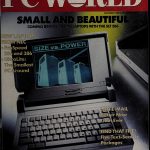
  • PC World (November 1988)

    PC World was probably the best general PC specific magazine (though I preferred Boot/Maximum PC when it came along much later). The late 1980s and early 1990s were probably peak for PC World, at least in terms of page count. The November 1988 issue of PC World includes:

    Review

    • LAN E-Mail: Power to the Work Group – A look at four LAN e-mail packages including cc:Mail 1.2, The Network Courier 1.0, InBox/PC 1.24, and Da Vinci eMail 1.2.
    • In Search of Forgotten Text – A look at four programs for searching for text on your hard drive including ZyIndex Professional 3.0, Memory Lane 2.0, SearchExpress 2.30, Gofer 1.0, and The Text Collector 1.5.
    • Project Management – For Professional Only – A comparison of five project management packages including SuperProject Expert 1.1, Time Line 3.0, Micro Planner 6, Harvard Total Project 2.0, and Microsoft Project 4.0.
    • Multitasking Without OS/2 – A look at four operating environments that are alternatives to OS/2 for multitasking. They use the virtual 8086 mode of the 80386. These operating environments include Windows/386 2.1, Desqview 2.01, VM/386 1.1, and PC-MOS/386 2.10.
    • The Hardware Shelf – Reviews of: The Micro 1 Tower 386-20MHz featuring a 20 MHz 386 CPU, 2 MB RAM, and 110 MB hard drive for $4424; SnapShot, an “image processing system” capable of capturing images from video sources such as video cameras, VCRs, live TV broadcasts, etc.; HP PaintJet (a color inkjet printer), Zoom HC 2400 (internal 2400bps modem), and Panasonic KX-P4450 Laser Printer.
    • The Software Shelf – Reviews of: Sprint 1.0 (word processor), VP-Planner Plus 2.0 (spreadsheet), PFS: First Publisher 2.0 (desktop publishing), GrandView 1.0 (personal information manager), EasyCAD 2 2.05, and HB-Browser (utility for previewing spreadsheet and word processor files).

    News

    • Top of the News – Clone makers challenge IBM’s micro channel architecture with EISA; IBM introduces 386 based PS/2 Model 30; postscript capabilities to be added to HP’s LaserJet; Ashton-Tate releases dBASE compiler; Compaq introduces laptop and the smaller footprint Deskpro 386/20E; and more.
    • Preview – A first look at new 386 and 286 based laptops including the NEC ProSpeed 80386, ProSpeed 80286, and UltraLite, Compaq SLT 286. Plus an early looks at the Compaq 386/20E.
    • Industry Outlook – Oracle’s SQL; more PS/2 clones unlikely; Peachtree reintroduces accounting software; and more.
    • Product Outlook – A look at new products including SuperCalc (spreadsheet), Fast Talk (communications program), The Picture File (art program), SmallTalk/V 286 (programming), Paragon 286V (PC), 386 Motherboard/AT (386 motherboard upgrade from Hauppage for PC ATs) and more.
    • Briefly Noted – A brief look at new machines from Tandy including the 3000 NL, 1000 TL, and 1000 SL.

    Feature

    • Beyond E-Mail: The Groupware Potential – A new type of network software includes features such as conference calls, electronic meetings, and more.
    • OS/2 Extends Its Reach – OS/2 Extended Edition adds additional networking and communications features.
    • Buyers’ Guide: Accounting Tools of the Trades – A round-up of a ton of accounting software packages including one specialized for point-of-sale, construction, medical, and more.

    How To

    • How Hard Is Your Money Working? – A guide to determining your return on investment and if your investments are performing sufficiently.

    Perspectives

    • Richard Landry – The industry standard EISA bus strikes back against IBM’s proprietary MCA architecture.
    • Letters – Letters from readers about IBM’s licensing, shareware, the future of computers, PagePerfect problems, Epson dot-matrix printers, and more.
    • David Bunnell – The customers’ relationship to software companies.
    • Stewart Alsop – A look at the various GUIs available with an emphasis on Microsoft’s Presentation Manager.
    • On IBM – A look at what IBM can learn from its “successes”, including the PS/2.
    • Another Angle – Cutting through the jargon of the PC industry.

    Departments

    • Consumer Watch – Even back in the day, unscrupulous vendors would misleadingly overclock systems. For example, it was not uncommon for a vendor to sell 25 MHz 386 that was really an overclock 20 MHz part.
    • The Upgrade Path – A look at a device called the Chargecard that plugs into the CPU socket between the CPU and motherboard of a 286 based system to allow it to address up to 16MB of RAM.
    • The Help Screen – Answers to questions about tape backup drives, twisted pair cables, keyboards and the cent symbol, .BAK files, cleaning floppy drives, and more.
    • Tech Notes – A guide to how multitasking works in OS/2.
    • Sourcebooks – Reviews of Alfred Glossbrenner’s Master Guide to CompuServe and Peopleware: Productive Projects and Teams.

    …and more!