• Tag Archives Super NES
  • Donkey Kong Country (Super NES)

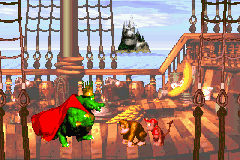
    Donkey Kong Country was released in 1994 by Rare for the Super Nintendo Entertainment System. In terms of graphics, sound, and game play, this game really represents the peak of 2D side-scrolling platform gaming in the 16-bit era. This game was also a major revival for the Donkey Kong franchise which really hadn’t seen a major new releases since the Atari 2600 era arcade ports.

    At a high level, Donkey Kong Country is a traditional platformer like many others. It is just particularly well executed. It follows the adventures of Donkey Kong and his sidekick, the newly introduced Diddy Kong, as they seek to recover their stolen bananas from the evil King K. Rool and his various minions. The plot isn’t anything groundbreaking but the plot in a game like this is hardly the most important thing.
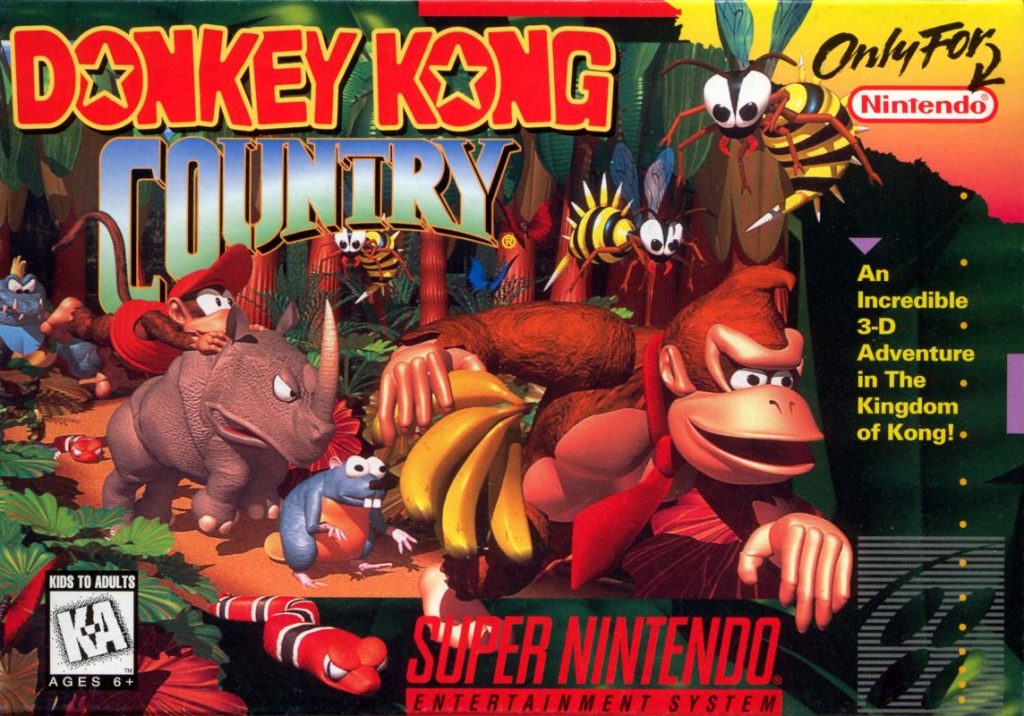
    The most important aspect of Donkey Kong Country is the excellent game play. The controls are among the best for such games leaving you no reason to be frustrated on that front. You can control either Donkey Kong or Diddy Kong each of which has their own strengths and weaknesses. Donkey Kong is larger and stronger and can more easily defeat stronger enemies. However, Diddy Kong is smaller and faster. These differences add a bit of a strategic element to the game when it comes to choosing the appropriate character for a given situation.

    The levels feature a ton of variety which is always important in this kind of game (or any game really). Each level has a multitude of challenges, hidden secrets, and items to collect. The environments are also quite varied featuring locals such as industrial factories, jungles, ice caves, etc. Each of these of course has new obstacles to overcome.

    One of the more unique aspects of Donkey Kong Country is the ability to summon animal companions. Various animals can be summoned to assist you including Rambi the Rhinoceros (who can charge through enemies), Expresso the Ostrich (who provides increased speed and height), and others.

    Donkey Kong Country also broke new ground when it came to graphics on 16-bit systems. Rare used a method of creating pre-rendered 3D models (using SGI Challenge workstations) and then turning them into 2D sprites. At the time it came out, nothing else looked remotely like Donkey Kong Country. All aspects of the graphics were pretty amazing including the character models, character animations, and the detailed environments and backgrounds. The soundtrack and sound effects were equally well done. Creating the score was a major project in itself with theme music appropriate to each level.

    If all of that weren’t enough, Donkey Kong Country offers tons of replayability and an excellent difficulty curve. The game starts off pretty easy with difficulty ramping up as you progress through the levels. It never gets so hard as to be frustrating. For more advanced players, the true difficulty and replayability of the game comes from completing levels 100% by exploring all areas, collecting all necessary items and completing all challenges.
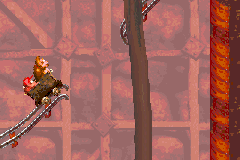
    Donkey Kong Country was a huge success for Rare and was the game that really brought them into the spotlight. It was a huge influence of future platformers, not the least of which are its own sequels including Kong Country 2: Diddy’s Kong Quest and Donkey Kong Country 3: Dixie Kong’s Double Trouble.

    There have been a variety of ports and re-releases over the years. There was a port of this game on the Game Boy Color in 2000 that was a pretty faithful conversion. There was another release on the Game Boy Advance in 2004 which was nearly identical to the Super NES original. There were also a few releases of the original Super NES version on the Virtual Console for the Wii, 3DS and Wii-U. The most recent re-releases have been as part of the Super NES Classic Edition in 2017 and via Nintendo Switch Online in 2020.
    If you are a platform game fan then this game is a game you don’t want to miss and if you enjoy this one, you’ll probably enjoy the two sequels mentioned above as well. There have been additional sequels and spinoffs over the years but the original is still something special. Perhaps more than any other game, Donkey Kong Country was responsible for keeping the Super NES relevant in the face of the impending PlayStation and Saturn releases (the N64 wouldn’t be released until a couple of years later) and in claiming ultimate victory in the 16-bit wars.


  • Donkey Kong Country 2: Diddy’s Kong Quest (Super NES)

    Source: Coaster Crunch ‘Donkey Kong Country 2’ Super Nintendo Support us on Patreon

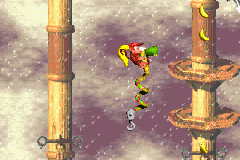
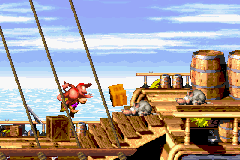
    Donkey Kong Country 2: Diddy’s Kong Quest was released by Rare for the Super NES in 1995. It was the sequel to a very successful platformer so it had a lot to live up to. Fortunately, it was up to the task.

    Donkey Kong Country 2 was released near the height of the popularity of the 2D platformer style game, the side scrolling action type of game popularized by the original Super Mario Brothers. This was also near the height of 16-bit gaming. In other words, the graphics and sound capabilities of the Super NES were being fully exploited by this point and the mechanics of the 2D platformer had been pretty much perfected. Donkey Kong Country 2 demonstrates this quite well.

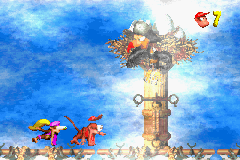
    In Diddy’s Kong Quest, players take on the roles of Diddy Kong and his girlfriend, Dixie Kong, as they attempt to rescue Donkey Kong from the evil K. Rool. Like most platformers, this game features a mix of side-scrolling action, platforming challenges, and puzzle-solving elements. Players navigate through a variety of vibrant and imaginative worlds, each with its own set of levels that introduce unique themes, enemies, and obstacles. One of the ways in which this game excels is in the variety of levels, enemies and obstacles. The game is challenging but you don’t have to worry about being bored or suffering from overly repetitive game play.

    The other unique way in which this game excels is in the cooperative game play elements. Whether you are playing by yourself or with a friend (one controlling Diddy and the other Dixie), you’ll have to use the right character for the given challenge. Each character has its own advantages. Diddy Kong is faster and more agile while Dixie can glide and reach greater heights via a helicopter spin.

    As far as graphics go, this game really broke new ground. Rare used pre-rendered 3D graphics to create the 2D sprites which gave the game a very distinct look. This was novel at the time and of course the graphics were excellent. In addition to this, the character animations and backgrounds were all extremely well done.

    Likewise, the music was also extremely well done. There is a wide variety of tunes that match the distinct feel of each level. Sometimes sound and music don’t strike you as immediately as the graphics but the nostalgia that certain music and even sound effects from games can trigger is an indication of just how good they were in many case.

    If you are a fan of 16-bit games or 2D platformers that this really isn’t one you should miss. I know many people (myself included) may feel that the theme isn’t serious enough or prefer a more fantasy or sci-fi feel (myself included) but as one of the best 2D platformers of all time, you should really at least give it a try.

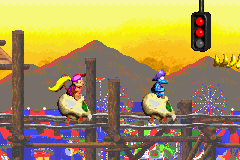
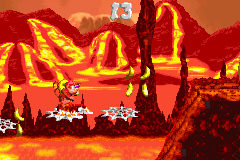
    You can of course check this game out on an original SNES system but I don’t think used copies are cheap. It was also released for the Game Boy Advance and via the Wii and Wii U virtual consoles, Nintendo 3DS Virtual Console and the Nintendo Switch online service. You should also check out the original Donkey Kong Country and the sequel to this game, Dixie Kong’s Double Trouble! There were further sequels and follow-ups on the Nintendo 64 though these have a different feel to them.


  • GamePro (June 1996)

    Source: GamePro – Issue Number 93 – June 1996

    GamePro was one of the most popular gaming magazines of the 1990s. I didn’t pick up GamePro very often because there were other magazines I preferred (e.g. Electronic Gaming Monthly) and I didn’t have unlimited funds for magazines. GamePro always felt like it had a slightly younger target audience but it was still a solid magazine. The June 1996 issue includes:

    FeatureS

    • GamePro Readers’ Choice Awards – The best games and systems of the year as determined by readers. Some of the highlights include Myst (Saturn) for best strategy game, Chrono Trigger (SNES) for best role-playing game, Zoop for best puzzle game, PlayStation for best overall system, Ultimate Mortal Kombat for best arcade game, Road Rash 3 (Genesis) for best 16-bit racing sim, Donkey Kong Land (Game Boy) for best handheld game, Destruction Derby (PlayStation) for best next-gen racing game, and Doom (PlayStation) for best next-gen corridor shooter (I guess “first person shooter” wasn’t as universal of a term as it would become?). There are a bunch of other categories with each category having several entries.
    • Electronic Entertainment Expo Sneak Previews – Better known as E3, this used to be an important event in the gaming industry. Some new things shown (most still under development at the time) include Star Wars: Shadow of the Empire (Nintendo 64), Super Mario 64 (Nintendo 64), Turok Dinosaur Hunter (Nintendo 64), Shredfest (PlayStation, Saturn), Tigershark (PlayStation, PC CD), Pandemonium (PlayStation), Bogey: Dead 6 (PlayStation), Jumping Flash 2 (PlayStation), Dark Forces (PlayStation), Rebel Assault II (PlayStation), Bubsy 3D (PlayStation, Saturn), Ultimate Mortal Kombat 3 (Saturn), Tomb Raider (Saturn), Gun Griffon (Saturn), X-Perts (Genesis), Vectorman 2 (Genesis), and lots more.
    • War Gods: First Look from the ACME Show – A first look at the War Gods arcade game. This was a new 3D fighter from Midway.
    • Watch Out for War Gods: A Fighter’s Edge Special Report – A detailed look into Midway’s new 3D fighting game.
    • 16-Bit Gamer’s Survival Guide – 32-bit consoles had been around for about a year at this point but 16-bit consoles were still going strong. This is a look at some of the latest games for 16-bit systems including Bass Masters Classic ’96 (SNES), Bugs Bunny in Double Trouble (Genesis), Ken Griffy Jr’s Winning Run (SNES), Lobo (Genesis) Marsupilami (Genesis), Maui Mallard (SNES), Mo Hawk and Headphone Jack (SNES), Time Killers (Genesis), and more plus a couple of best of lists.

    SWATPro Strategy Section

    • Resident Evil PlayStation ProStrategy Guide – A detailed strategy guide for the game that popularized the survival horror genre.
    • Super Mario RPG Super NES ProStrategy Guide – A strategy guide for Super Mario RPG. These guides aren’t something you want to use unless you are really stuck. Otherwise, I think they spoil the game.
    • SWATPro – Hints, tips, cheats and more for Bases Loaded ’96 (PlayStation), NHL All-Star Hockey (Saturn), Earthworm Jim: Special Edition (Sega CD), Return Fire (3DO), PO’ed (PlayStation), Doom (3DO), ViewPoint (PlayStation), Last Gladiators: Digital Pinball (Saturn), Raiden Project (PlayStation), Shinobi Legends (Saturn), Sega Rally Championship (Saturn), Darius Gaiden (Saturn), Toy Story (Super NES), and more.
    • Lunar II: Eternal Blue (Sega CD) – A guide to reaching both endings in this RPG. I always wanted this (and its predecessor) for the TG-16 CD-ROM but for some reason never got around to playing them.
    • Return Fire (PlayStation) – Tips for this overhead helicopter combat game. It reminds me a bit of the Strike series (Desert Strike, Urban Strike, etc.).
    • Zero Divide – Special moves and combos for this robot fighting game.
    • Samurai Showdown III (Neo Geo) – A move list for this classic fighting game on the Neo Geo.

    Departments

    • Letter from the GamePros – A look at some of the latest changes to the magazine.
    • The Mail – Letters from readers about “palette swap” characters in games, NBA in the Zone, AC adapters for the Sega Nomad, and more.
    • GamePro Gallery – Video game related artwork from readers.
    • Buyers Beware – Questions answered about the shareware version of Duke Nukem 3D, the price of Killer Instinct 2, Squaresoft, XBand keyboard repair, playing old games on new systems, and more.
    • ProNews – Angry mom gets Primal Rage removed from store shelves; Sega, Sony and Nintendo cut console prices; PlayStation sales go over the 1 million mark; new VR baseball game; and more.
    • GamePro Online – Some of the GamePro content you can find on America Online, various web sites, and more.
    • The Cutting Edge – A look at the $150 28.8bps modem for the Sega Saturn.
    • GamePro Labs – A look at a new disc called The Game Guru for the 3DO that provides cheats by altering saved games.
    • PC GamePro – PC coverage was a bit of an afterthought with GamePro. This section has brief looks at HyperBlade (PlayStation, Saturn, PC CD), Vikings: The Strategy of Conquest (PC CD, Mac CD), and Kingdom O’ Magic (PC CD).
    • Hot at the Arcades – A look at some of the latest arcade games including Virtua Fighter 3, War Gods, Tokyo Wars, Ace Driver Victory Lap, Dirt Dash, NBA Hang Time, Dunk Mania, Batman Forever, NBA Jam Extreme, Run and Gun 2, Midnight Run, Crypt Killer, Metal Slug, Dungeons & Dragons, Art of Fighting 3, and Street Fighter Alpha 2.
    • Overseas ProSpects – A look at new and upcoming arcade games in Japan including Virtua Fighter Kids, Prop Cycle, Sonic the Fighter, and Star Gladiator.

    …and more!