
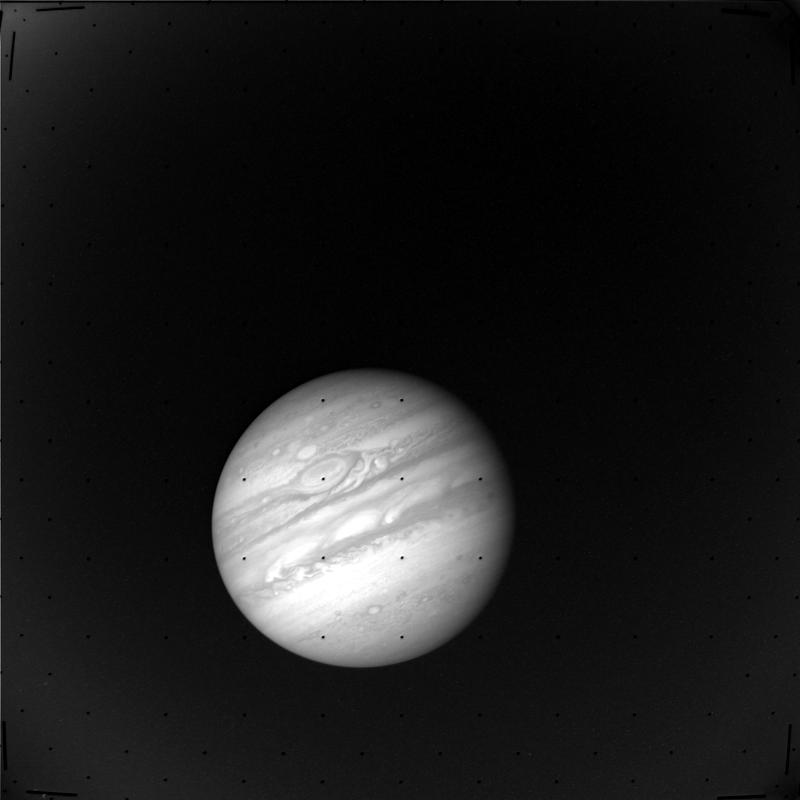
A photo of Jupiter.
Took by Voyager with VGISS on February 28, 1979 at 04:30:59.
http://darth-azrael.tumblr.com/post/154214185940/hellospacebot-a-photo-of-jupiter-took-by
A photo of Jupiter.
Took by Voyager with VGISS on February 28, 1979 at 04:30:59.
http://darth-azrael.tumblr.com/post/154214185940/hellospacebot-a-photo-of-jupiter-took-by

John H. Glenn Jr., a decorated combat veteran and test pilot who gained worldwide fame as the first American to orbit the Earth, went on to become a U.S. senator and, in the autumn of his life, returned to space aboard the shuttle Discovery, has died. He was 95 years old.
Glenn had been hospitalized at the Ohio State University James Cancer Center. Details of his illness were not disclosed.
Soon after the confirmation of his death, NASA tweeted: “We are saddened by the loss of Sen. John Glenn, the first American to orbit Earth. A true American hero. Godspeed, John Glenn. Ad astra.”
Source: John Glenn, first American to orbit the Earth, passes away at 95 – Spaceflight Now

Juno has already gone further into Jupiter’s orbit than any space probe before it, and the satellite is now heading into the second half of its first full orbit around the solar system’s largest planet.
When Juno arrived at Jupiter on July 4, it began the first of two 53-day “capture orbits.” Having now reached “apojove,” the furthest point from Jupiter during this long, elliptical orbit, Juno will now move closer and closer to the gas giant until it reaches “perijove,” its closest approach, on Aug. 27.
Juno’s first lap of Jupiter represents the final step before the probe can settle into its scientific mission, collecting new data on the planet’s surface and climate that astronomers believe will shed light on the solar system’s formation.
After the probe completes its first two orbits, it can start on its primary mission goals – locate the gas giant’s core, if any, and search for water in Jupiter’s atmosphere. The “precious” data Juno gathers, NASA scientists have said, will help them better understand how the gas giants formed, as The Christian Science Monitor’s Jason Thomson wrote in June:
Like its namesake, Juno the spacecraft will peer beneath the thick clouds of the solar system’s largest planet to uncover secrets of Jupiter’s formation and current conditions….
Jupiter is composed largely of hydrogen and helium, just like the sun, leading scientists to suppose that it, too, was born in the early days of our solar system, capturing material left over from the birth of our star. Because of the planet’s enormous mass, it may have retained its original composition, unlike Earth, providing an opportunity to peer into the past.
With both the five-year trek from Earth to Jupiter and the risky, radiation-laden Jupiter-orbit insertion behind it, Juno has entered the final preparation phase. In October, after completing the two capture orbits, Juno will fire its engine to shorten its orbital period down to 14 days and begin its science mission.
“We’re in an excellent state of health, with the spacecraft and all the instruments fully checked out and ready for our first up-close look at Jupiter,” said Rick Nybakken, the project manager for Juno at NASA’s Jet Propulsion Laboratory in Pasadena, Calif., in a press release last week.
Full article: Juno space probe reaches milestone in first lap around Jupiter – CSMonitor.com